

Backpacking meal planning: How to calculate food per day

You’ve got your gear dialed in, your route mapped, and your boots broken in. But one of the most common questions remains: How much food should I actually pack for a backpacking trip?
Packing too little leads to “hiker hunger” and energy crashes, while packing too much turns your pack into a lead weight. The sweet spot isn’t just about guesswork—it’s about matching your caloric needs to your exertion level and prioritizing high-density nutrition. For a broader look at managing your supplies, check out our complete guide to self-sufficient hiking (water and food).
The baseline: How much food should you pack?
Most experienced backpackers aim for 1.5 to 2.2 pounds of food per person, per day. This range generally provides 2,500 to 4,500 calories daily, depending on your body size, the terrain, and the intensity of your hike.
However, math on a spreadsheet rarely matches the reality of the trail. You can hit your caloric targets and still feel like you’re running on empty. I learned this the hard way on the Appalachian Trail; despite careful planning, “hiker hunger” is a real physiological force that often demands more fuel than you think.
To visualize what those calories actually look like in your pack, consider the density of your staples:
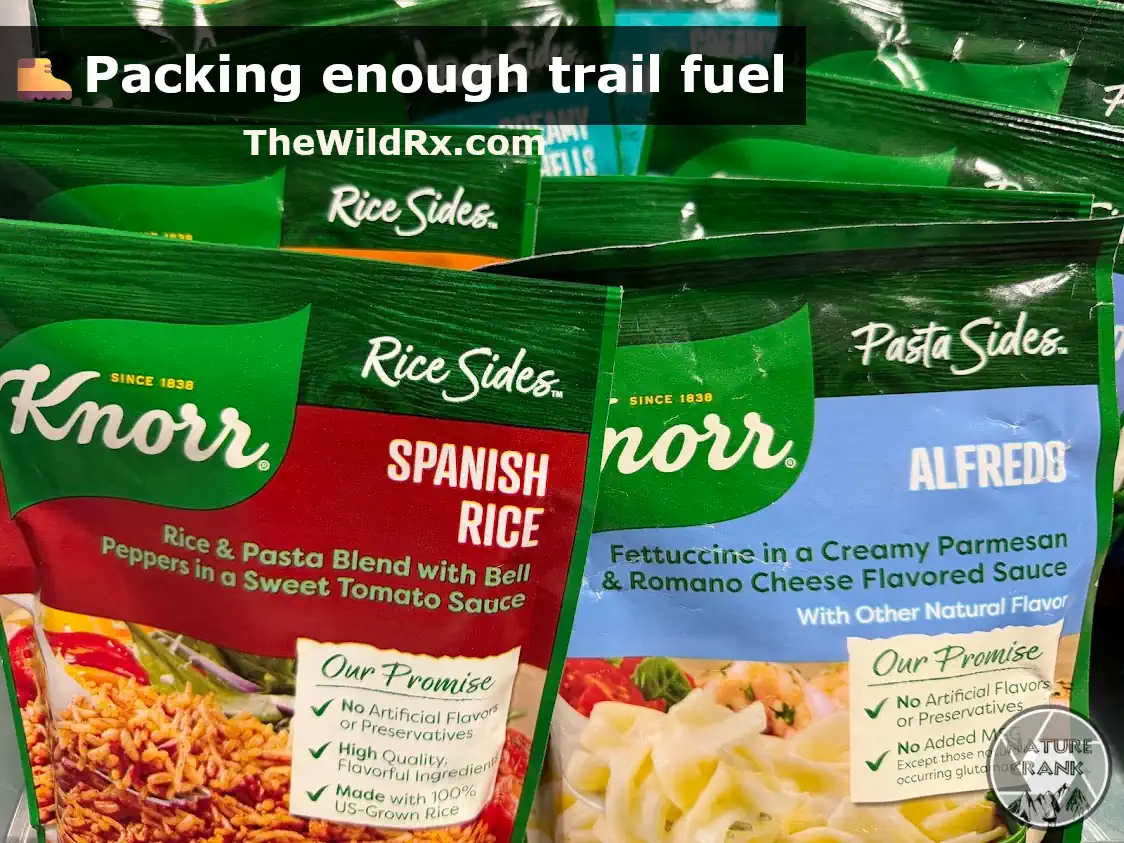
- Knorr Sides: A classic, budget-friendly staple. While convenient, they generally hover between 290 and 500 calories per pack, with many flavor varieties falling under the 300-calorie mark.
- Ramen noodles: A lightweight powerhouse, providing roughly 380+ calories per brick. They are easy to bulk up with oils or protein packets to boost the caloric density.
- Instant potatoes: These are a backpacker’s secret weapon for high-calorie, low-weight meals, packing 110+ calories per ounce—far denser than many of the freeze-dried meals found in fancy outdoor stores.
- The calorie hack: If you aren’t hitting your numbers, don’t pack more food—pack more density. Carrying single-serve olive oil packets or almond butter packets is the easiest way to add 200+ calories to any dinner without adding noticeable weight.
The takeaway? Don’t just look at the total weight of your food bag. Look at the caloric density per ounce. A bag of food that weighs two pounds but is made of low-calorie items will leave you dragging on a 15-mile day, whereas the same weight in nutrient-dense staples will keep your engine running smoothly.
Also, consider your meal’s water requirements. Meals that require heavy rehydration (like those needing lots of simmering) don’t just add stove fuel weight; they demand that you carry more water weight if you are hiking in arid zones.
Related: Thru-hiking nutrition: Cold-soaking vs. stoves
Quick reference: Daily food requirements by trip type
| Trip Type | Target Calories | Estimated Weight/Day | Typical Intensity |
| Easy/Casual | 2,500–3,000 | 1.2–1.5 lbs | Short miles, flat terrain |
| Standard | 3,000–4,000 | 1.75–2.0 lbs | 8–15 miles/day, moderate elevation |
| Strenuous/Thru-hike | 4,000–5,000+ | 2.2–2.5+ lbs | High mileage, major vertical gain |
Pro Tip: Always carry at least an extra day’s worth of calorie-dense, no-cook snacks (like nuts or bars) as part of your safety buffer. If you get delayed by weather or injury, you’ll be glad you have them. I’ve even had to dip into my dog’s pack for extra calories on the trail—a great reminder to always pack a little extra for your trail partners (human or canine).
Factors that influence your caloric needs
Your body is an engine, and like any engine, it burns fuel at different rates based on conditions. You may need more food if you are:
- Tackling high mileage or elevation: Big climbs burn significantly more energy. Hiking burns anywhere from 300 to 600+ calories per hour, depending on pack weight and terrain steepness.
- Hiking in extreme temperatures: Your body burns more calories staying warm in cold conditions or cooling down in the heat.
- Body composition: Larger individuals and those with higher lean muscle mass generally require a higher baseline caloric intake.
How to calculate your personal calorie needs
Don’t just wing it. Use this simple math to get closer to the mark:
- Start with your base rate: Most adults need 2,000–2,500 calories just to exist. If you want a more accurate count, use the Mayo Clinic Calorie calculator. For my height, weight, and age, I need around 2500 calories for normal days.
- Add trail exertion: Estimate your hiking time. If you’re hiking 6 hours a day, add at least 1,800–2,400 calories to your base.
- Use caloric density: Focus on foods with at least 125 calories per ounce.
- Calculation: If you need 3,500 calories, divide by 125.
3,500 \ 125 = 28 ounces (1.75 lbs).
- Calculation: If you need 3,500 calories, divide by 125.
The macronutrient balance
For sustained energy, aim for a balanced distribution. Research from the American Heart Association emphasizes the importance of these ratios for sustained endurance.
- Carbohydrates (50–60%): Your primary, quick-burn fuel. Think oats, dried fruit, and grains.
- Fats (25–35%): Highly calorie-dense and essential for long-term endurance. Think nut butters, olive oil, and nuts.
- Protein (10–20%): Critical for muscle recovery overnight. Think jerky, tuna pouches, or protein powder.
The trail fuel strategy: Managing body weight and energy stores
Before you even step on the trail, your body’s current composition plays a major role in how you should plan your food. Backpacking is a catabolic activity—meaning your body will inevitably break down tissues for energy. Whether your goal is to maintain your current weight, lean out, or intentionally build a “buffer” for a grueling thru-hike, you need to adjust your strategy. The American Council on Exercise provides excellent resources on how different activity intensities impact your caloric burn.
Before the trek: Strategic prep
- Building the buffer: If you are planning a high-mileage, multi-week trek, intentionally gaining a few pounds of healthy weight (or at least maintaining a robust baseline) is common practice. Your body will likely shed a significant amount of fat and muscle during the first few weeks of consistent hiking.
- The “town” effect: When you hit a town, the goal shifts from “high-density nutrition” to “immediate recovery.” This is your chance to prioritize high-protein, high-sodium, and high-calorie foods that are difficult to carry on-trail—think fresh burgers, eggs, and heavy dairy.
Managing your weight on the trail
- If you are trying to lose weight: Stick closer to the 1.5–1.8 lbs/day mark. You have internal energy stores (body fat) that will help cover the deficit. However, never cut your calories so low that you compromise your recovery or mental sharpness.
- If you are trying to maintain: Aim for that 2.0–2.2 lbs/day range and ensure you are front-loading your day with complex carbs and finishing with fats/proteins to keep your metabolism steady through the night.
The “Splurge” factor
Never underestimate the psychological value of a “town meal.” Taking a day or two to eat calorie-rich, non-backpacking food acts as a crucial reset for your body and your motivation. It allows you to replenish electrolytes and glycogen stores that trail food just can’t provide. A hamburger never tastes better than having hiked for weeks prior.
Warning: Be cautious when going from weeks of “trail-lean” eating to a massive town splurge. Your digestive system will be sensitive. Start with smaller, nutrient-dense meals before going straight for the “all-you-can-eat” buffet to avoid GI distress.
Tips for a lighter, better-fueled pack
- Repackage everything: Ditch the bulky boxes. I personally use reusable silicone snack bags or simple Ziploc-style bags to save space, reduce weight, and keep my pack organized.
- Eat early and often: Don’t wait until you’re “bonking.” Snack every 60–90 minutes to keep your blood sugar steady.
- Prioritize variety: If you’re out for more than three days, you will get bored. Mix savory and sweet, and bring a “treat” (like dark chocolate) to boost morale.
- Test on short trips: Use an overnight trip to track exactly how much you eat. Bring back your leftovers and weigh them to refine your numbers for your next big adventure.
Don’t forget your four-legged hiking partner
While calculating your own calories is vital, your dog’s metabolic needs differ significantly based on breed, age, and pack weight. Don’t eyeball their rations. See our guide on Dog hiking nutrition: How to calculate food for backpacking trips to learn how to adjust for their energy output.
For a broader look at trail life with a pup—including water, safety, and paw care—check out our ultimate guide to backpacking with dogs.
Frequently asked questions
Master your trail menu: Final thoughts
Packing the right amount of food is a balance between precision and experience. By shifting focus from arbitrary weight rules to your specific caloric needs and high-density nutrition, you’ll spend less time worrying about your pack weight and more time enjoying the miles ahead.
Remember, your first few trips are your best data points. Keep a simple log of what you packed versus what you actually ate, and use that to iterate for your next adventure. With a little planning, you can fuel your body effectively without ever feeling weighed down.
Let’s keep the conversation going
How do you handle your food prep for long treks? Do you have a “go-to” high-calorie snack that always saves the day, or a custom trail recipe you swear by? Drop your favorite trail-tested fuel tips in the comments below! If you found this guide helpful for your next trip planning, please share this article with your hiking group—it might just save someone else from carrying an extra three pounds of unnecessary snacks.
Disclaimer: These guidelines are for informational purposes. Individual metabolic needs vary wildly. Always consult with a healthcare professional or sports nutritionist for personalized dietary advice, especially for long-distance thru-hikes.
Discover more from The Wild Rx aka NatureCrank™
Subscribe to get the latest posts sent to your email.