

The ultimate guide to wildlife safety & pest management for off-grid RV living

Living off-grid isn’t just about escaping the city; it’s about entering a complex, pre-existing neighborhood. When you park your rig in the backcountry for a stint of boondocking, you aren’t an owner—you’re a guest.
The Core Principle: Off-grid wilderness living success isn’t about defeating wildlife; it’s about establishing firm boundaries. When you master animal behavior, you protect your rig and the ecosystem simultaneously.
Structural prevention: How to rodent-proof your RV
Your RV is a beacon of warmth and food smells. The most effective way to manage pests is to ensure they never get inside. This requires a “bottom-up” approach to maintenance and RV rodent-proofing.
- The pencil rule: If a standard No. 2 pencil can fit through a gap, a mouse can too. Inspect your rig’s exterior monthly.
- Seal the underbelly: Use expandable foam to fill gaps around plumbing and wiring. Pro-tip: Reinforce the foam with copper mesh or steel wool by stuffing it in as well, as rodents can easily chew through foam alone.
- Manage scent trails: Mice and ants follow pheromone trails. Regularly wipe down surfaces and storage bays with enzyme cleaners or a peppermint oil solution to disrupt their navigation.
- Check the slide-outs: Ensure your rubber seals (bulb seals) are intact. Gaps in the corners of slide-outs are “welcome mats” for spiders and insects.
Site awareness: Choosing a safe campsite
Before you drop your stabilizers, you need to “interview” your campsite. Many wildlife encounters can be avoided by choosing a spot that isn’t a natural thoroughfare for local fauna.
What to look for:
- The “edge” effect: Avoid parking directly against dense brush or tall grass. These areas are hunting grounds for predators and hiding spots for snakes.
- Game trails: Look for flattened grass or narrow paths leading to water. Parking on a game trail ensures a midnight visit from larger mammals like deer or elk.
- Ground holes: Be wary of burrows near rocks or logs. These may house anything from harmless ground squirrels to venomous snakes or aggressive wasps.
Understanding the locals: From bears to beetles
Effective pest management changes based on who is knocking at the door. We’ve broken down the most common encounters into three distinct categories:
1. The heavy hitters (Bears, coyotes, and wolves)
Focus on attractant management. Large predators are usually drawn by smell.
- Never leave trash outside overnight.
- Store pet food in airtight containers inside the rig.
- Carry EPA-approved bear spray and know how to use it. Keep bear spray on your person or within arm’s reach inside the cabin, not buried in storage.
- Master the “ghosts”: For a deeper look into managing territory and protecting pets from canines, see our full guide on how to coexist with coyotes and wolves off-grid/RV living.
- Master bear territory: For a complete protocol on food storage, deterrents, and what to do during an encounter, read our full guide on how to deal with bears living off-grid/RV living.
2. The low-profile residents (Snakes, spiders, and scorpions)
Focus on situational awareness. Snakes are generally defensive, not aggressive.
- Keep a “hands-clear” policy: never reach under your RV or into a woodpile without looking first.
- Use a UV flashlight at night: This is essential for spotting scorpions, which glow under blacklight.
- Check for Black Widows: While scorpions are a threat, Black Widow spiders are common in the West and love the dark undersides of RVs. Always wear gloves when reaching near stabilizing jacks or the “lip” of your RV’s exterior siding, as these are prime nesting spots.
- Know your neighbors: For a complete breakdown of identification, defensive postures, and safe removal techniques, see our guide, Dealing with snakes: A guide for off-grid and RV living.
3. The persistent intruders (Mice, rats, and insects)
These are the most likely to cause actual property damage by chewing through PEX tubing or wiring harnesses.
- Keep all dry goods in hard plastic or glass containers.
- Clear away fallen leaves or debris from the top of your tires, as these provide bridges for crawling insects.
- Stop the invasion: For a step-by-step breakdown of trapping, exclusion, and repair, check out our post on dealing with mice and rats living off-grid or in an RV.
- Pack rats (woodrats): Unlike mice, pack rats love to build nests in engine bays and chew through expensive wiring harnesses.
- Erase the trails: For specific strategies on barrier defense and natural repellents, see our full guide, How to keep ants and spiders out of your RV: Prevention and control tips.
The pack rat threat: Protecting your engine bay
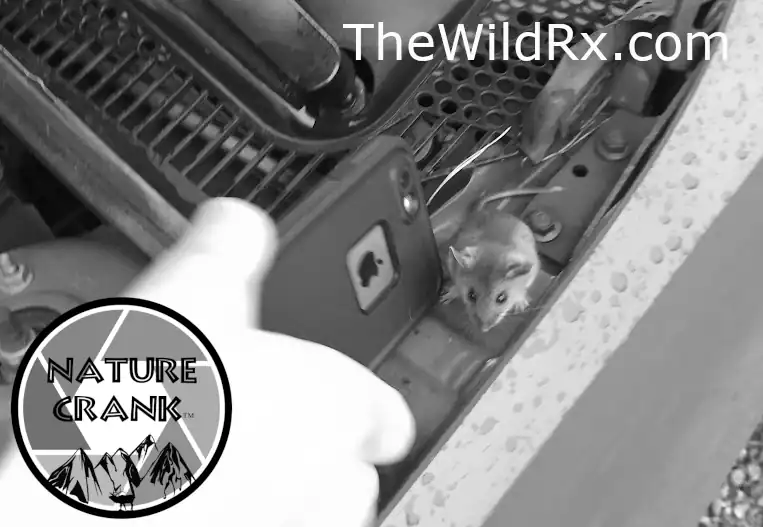
Pack rats, also known as woodrats, are a major concern for off-gridders because they love nesting in RV engine bays. Unlike mice, pack rats often chew through heavy-duty wiring harnesses, which can lead to thousands of dollars in damage or leave you stranded in the backcountry.
- Leave the hood open: Pack rats look for dark, sheltered spots. Leaving your hood cracked or fully open at night lets in light and air, making the engine bay an unappealing nesting site.
- Identify the signs: Look for “middens”—piles of sticks, shiny objects, and debris—around your battery or air intake. If you see these, do not start the engine until you’ve cleared the debris and inspected the wires.
Manage grey water
Don’t forget the grey tank! Food particles in your grey tank are a massive attractant. Keep your tank valves closed, check for leaks regularly, and never dump soapy dishwater on the ground near your site, as the scent can linger for days and draw in bears or rodents.
The off-grid safety toolkit: Essential gear
Every off-gridder should have a dedicated “wildlife bin” in their basement storage. Along with the checklist below, ensuring your food is inaccessible is the most critical step in boundary setting.
Hardened food storage: For a curated list of certified gear that actually works, check out our guide on the best bear-proof and rodent-proof food storage containers for off-grid living.
| Item | Purpose | Why you need it |
| EPA-approved bear spray | Deterrence | The most effective non-lethal defense against large predators. |
| Steel wool / Copper mesh | Prevention | Stops rodents from chewing into your plumbing or electrical bays. |
| Humane live-traps | Management | For removing “hitchhikers” that make it past your defenses. |
| Ultrasonic deterrents | Prevention | Uses high-frequency sound to discourage pests from nesting in your undercarriage. |
| UV flashlight | Scouting | Essential for spotting scorpions and checking for rodent urine trails. |
Frequently asked questions about RV pest control
Final thoughts on coexisting with nature
Wildlife management isn’t a “one-and-done” task; it’s a habit. By combining a respectful philosophy with a hardened structure and high situational awareness, you can enjoy the peace of the wild without the stress of an infestation.
What is your #1 tip for keeping critters out of your rig? Share it in the comments below!
Discover more from The Wild Rx aka NatureCrank™
Subscribe to get the latest posts sent to your email.