

The ghost drain: How to find and fix hidden power draws in your RV

That moment when you roll up to camp, flip on the lights, and nothing happens because your battery is stone dead again? It’s frustrating, and it’s usually not one big, obvious culprit. It is a sneaky “ghost drain“—or parasitic draw—quietly sipping power even when everything looks completely off.
These hidden electrical vampires are common in RVs and can kill a battery in a matter of days or weeks during storage. The good news? You can track them down and stop them without needing an electrical engineering degree. Here is exactly how to stop your rig from turning into a giant paperweight.
What causes ghost drains in RVs?
Most modern RVs have small circuits that stay “awake” for safety, memory, or convenience. While these features are great when you’re camping, a little draw here and there adds up fast on your house or chassis batteries.
Common culprits include:
- Safety detectors: Propane, carbon monoxide, and smoke detectors are often hardwired to bypass your main battery disconnect switch for safety reasons.
- Electronics memory: Stereo systems, TV backlights, and clocks often require constant power to keep settings saved.
- Inverters: Even in standby mode, inverters can pull significant power to monitor for a load.
- Appliance control boards: Refrigerator control boards, water heater igniters, and slide-out controller modules often have a “keep alive” power requirement.
- Ancillary equipment: USB charging ports, power antenna boosters, and aftermarket security cameras.
- Environmental factors: Corroded terminals or aging lead-acid batteries that have begun to “self-discharge” faster than usual.
Comparison table: Typical RV parasitic draws
Not all drains are created equal. Use this table to determine if your current draw is within a normal range or if you have a “vampire” on your hands.
| Item | Typical draw (mA) | Impact on a 100Ah battery |
| Normal baseline | 20–50 mA | Lasts weeks to months |
| Propane/CO detector | 100–200 mA | Drains in 2–4 weeks |
| Stereo memory | 10–50 mA | Minor but adds up |
| Inverter (standby) | 500–2,000+ mA | Drains overnight |
Note: Anything consistently over 50–100 mA when the RV is “off” is worth investigating.
How to test for parasitic draw in your RV
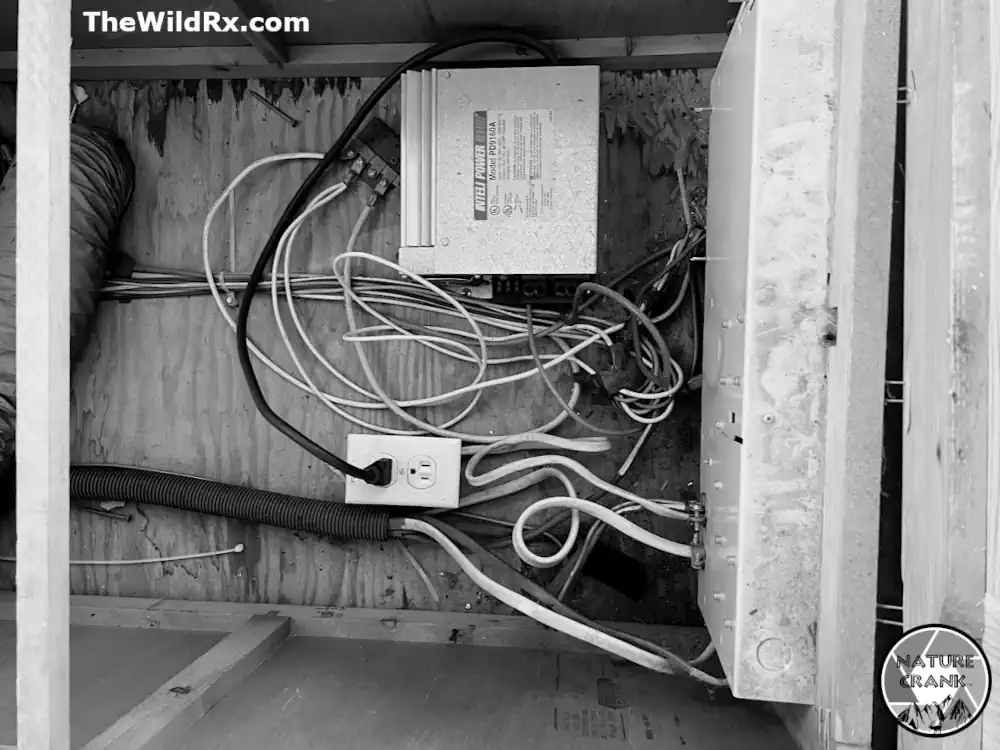
I had to perform this exact test on my 1987 Fleetwood, and let me tell you—digging through the wiring in a ‘dinosaur’ RV is a guaranteed headache. The wiring isn’t exactly color-coded for modern convenience, and 40-year-old connections can be a mess. But, by methodically pulling fuses and using my multimeter, I finally found the ‘vampire’ circuit. If I can track down a ghost drain in a rig from the 80s, you can definitely handle this in yours. It just takes time.
You don’t need a professional shop setup to find these leaks. While DC clamp meters are popular for high-current testing, they often lack the resolution to detect tiny parasitic draws. For the precision required to hunt down “ghost” drains, a standard digital multimeter is your best tool.
- Prep your rig: Fully charge your batteries and disconnect from shore power.
- Power down: Switch off all lights, appliances, the inverter, and your master battery disconnect switch.
- Set your tool: Set your multimeter to the highest DC Amps setting (usually 10A) first to avoid blowing the fuse. You can move to a lower “mA” setting only if you confirm the reading is very low.
- Connect in series: Disconnect the negative battery cable. Connect one lead of your meter to the battery terminal and the other to the disconnected cable end.
- Measure: Check the reading on your screen. If you are under 50 mA, you are in great shape. If you are reading much higher, it is time to start hunting.
Pro-tip: If you have a high reading, start pulling fuses one by one from your converter panel. When the number on your multimeter drops, you have found the circuit causing the drain. Write down what each fuse controls; your future self will thank you.
Video: All about parasitic loads in your RV
How to fix hidden RV power drains
Once you find the source, the fixes are usually straightforward:
- Install a true disconnect: Ensure your battery disconnect switch actually isolates everything. If your detectors are wired directly to the battery, consider adding a secondary “knife-style” switch at the terminal.
- Power down the inverter: Never leave the inverter on standby if you are leaving the rig for more than a day. Turn it off at the physical unit, not just the remote.
- Maintain your charge: For long-term storage, use a smart battery maintainer or a solar trickle charger to counteract the natural “keep-alive” draws.
- Upgrade to lithium: If you are tired of fighting lead-acid issues, consider lithium (LiFePO4) batteries. They have a much lower self-discharge rate and can handle being drained deeply without sustaining the permanent damage that kills standard batteries.
Prevention tips for long-term storage
- Monitor your health: Use a Bluetooth battery monitor. You can check your voltage from your phone without even walking outside to the battery box.
- Clean your connections: Corroded terminals create resistance. If you notice a lot of gunk on your wiring, read my guide “The ultimate RV life toolkit: Essential gear for maintenance and emergency repairs” to be sure you have all the appropriate gear and tools.
- The “modification” check: Every time you add a new “toy”—like a dash cam, solar controller, or LED strip—test your parasitic draw afterward to see if it added a surprise load.
For more advice on keeping your rig operational, see my RV weather safety guide to prepare for extreme conditions that affect battery performance
Frequently asked questions about RV ghost drains
Stop the drain and hit the road
Finding a hidden power draw isn’t just about saving your battery—it’s about the peace of mind that comes with knowing your RV will be ready to go the moment you are. By tackling these phantom loads now, you are protecting your investment and ensuring you spend more time camping and less time troubleshooting in the driveway.
Did you find a surprising source of power loss in your rig, or do you have a trick for battery maintenance we didn’t mention? Share this article with a fellow RVer who is tired of dead batteries, and let us know your best storage hacks in the comments below!
Dealing with electrical issues is part of the ‘dirty reality’ of off-grid life. For more tips on managing resources, check out my other articles on water challenges off-grid camping
and managing dust, dogs, and water scarcity.
Discover more from The Wild Rx aka NatureCrank™
Subscribe to get the latest posts sent to your email.