

Cowboy camping: The ultimate guide to sleeping under the stars safely

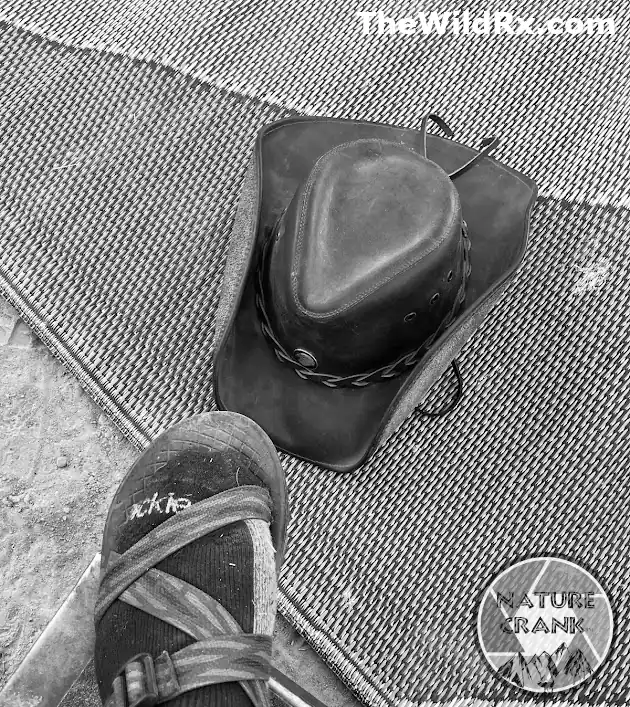
Let’s be real: the first time you sleep without a tent, every snapping twig sounds like a grizzly bear, and every rustle is a “definitely venomous” spider. My first time sleeping under the stars was in the military, and I hated it having been used to sleeping in a tent. But once you get past the initial jitters, cowboy camping is a game-changer. It’s the ultimate minimalist flex—no poles to snap, no stakes to lose, and no soggy tent fly to pack away in the morning.
Whether you’re crushing miles on the Pacific Crest Trail (PCT), Appalachian Trail (AT), or just want to feel less like a tourist and more like a local in the backcountry, ditching the nylon walls is the fastest way to level up your outdoor skills.
Benefits of cowboy camping: Why skip the tent?
Choosing to sleep without a shelter isn’t just about saving weight; it’s about changing your entire relationship with the trail.
- Unrivaled efficiency: You can set up or pack away your entire sleep system in under three minutes.
- Ultralight performance: Removing a tent can shave 2–5 pounds off your base weight. This may sound negligible to you if you haven’t been backpacking before, but those ounces add up quickly.
- Superior ventilation: Without tent walls, you eliminate the “rain” of internal condensation common in humid environments.
- Immersive stargazing: There is no substitute for watching a meteor shower from the comfort of your sleeping bag.
Essential gear for cowboy camping
You don’t need a mountain of expensive gear, but you do need to be smart. If you skimp on your sleep system, you’re going to have a miserable, shivering night.
| Gear item | Purpose | Pro tip |
| Groundsheet* | Protects your pad from punctures and moisture. | Use Tyvek or Polycro for the best weight-to-durability ratio. |
| Sleeping pad | Provides thermal insulation from the cold earth. | Look for an R-value of 3.0 or higher for 3-season camping. |
| Quilt or bag | Traps body heat. | Quilts are excellent for cowboy camping as they offer more freedom of movement. |
| Emergency shelter | Backup for sudden weather shifts. | Always carry a lightweight tarp or DCF (Dyneema) tent just in case. |
| Bivy sack | Optional weather and bug barrier. | A mesh-top bivy adds a psychological “wall” without losing the view. |
*Note: Why a groundsheet isn’t just a regular bedsheet
While it might be tempting to grab an old cotton sheet from your linen closet, a technical groundsheet (often called a “footprint“) is a non-negotiable piece of gear for cowboy camping. Unlike regular bedsheets, camping groundsheets are engineered from specialized materials like Tyvek, Polycryo, or silnylon.
These are essential for three reasons:
- Moisture barrier: They are waterproof or highly water-resistant, stopping ground dampness from soaking into your expensive sleeping bag.
- Puncture protection: They are “puncture-rated” to prevent thorns, jagged rocks, or desert burrs from popping your inflatable sleeping pad.
- Thermal insulation: By keeping your gear dry and clean, they help maintain the R-value of your sleeping system, ensuring you don’t lose body heat to the cold earth.
For the budget-conscious ultralight hiker, a piece of Tyvek HomeWrap is the industry secret—it’s nearly indestructible, lightweight, and dirt cheap.
Pro-tips for picking a “five-star” dirt hotel for cowboy camping
Site selection is your primary defense against the elements. Because you lack tent walls, you must use the landscape as your architecture.
Look for natural windbreaks
A light breeze feels great at sunset, but a 20-mph gust at midnight will ruin your life. Seek out large boulders or dense clusters of low-growing trees. These act as buffers against wind that can steal heat from your sleeping bag. However, always look up and avoid “widowmakers”—dead branches that could fall during the night.
Prioritize high ground
See that beautiful, lush meadow? Don’t sleep in it. It’s a literal sponge. Avoid camping in “cold sinks” or depressions where cold air and moisture settle. You’ll wake up soaking wet even if it didn’t rain. Slightly elevated ground stays warmer and is less prone to heavy morning dew. So, head for the trees if you can.
Check for wildlife signs
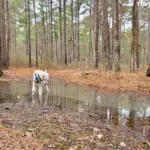
Avoid established game trails or areas near standing water, which attract both large animals and swarms of mosquitoes.
The “look up” rule
Before you roll out your bag, check for widowmakers. Those big, dead branches don’t care how cool your setup is.
Support the trail
Did you know that you can support my work and this website at no extra cost to you? When you shop through my Amazon Storefront or use my affiliate links, I may earn a small commission on your purchase. The best part? Anything you buy counts—not just the ones I recommend. Your support helps me keep this site ad-free and the gear guides coming!
Step-by-step guide: How to cowboy camp safely
- Monitor the weather: Check the “hourly” forecast. If the “chance of rain” is anything above 10%, have your tarp ready to deploy in the dark. Practice this at home first!
- Prep the site: Clear the area of sharp rocks or pinecones that could pop an inflatable pad.
- Orient your bedroll: Point your head slightly uphill. This prevents blood from rushing to your head and helps with drainage if a light drizzle starts.
- Organize your “reachables”: Keep your headlamp, bear spray (if in bear country), and rain shell inside your shoes or tucked under the edge of your pad. Seriously. Put them upside down or under your pad. Shaking a scorpion or spider out of your boot is a rite of passage you don’t actually want.
- Food belongs in the “kitchen”: Since you have no tent to hide odors, food storage is critical. Use a bear canister or a proper hang at least 200 feet from your sleeping spot.
- Leave nothing behind: As with everything outdoors and everywhere you go, be sure to prioritize Leave No Trace principles to protect the fragile ecosystems you may be sleeping in.
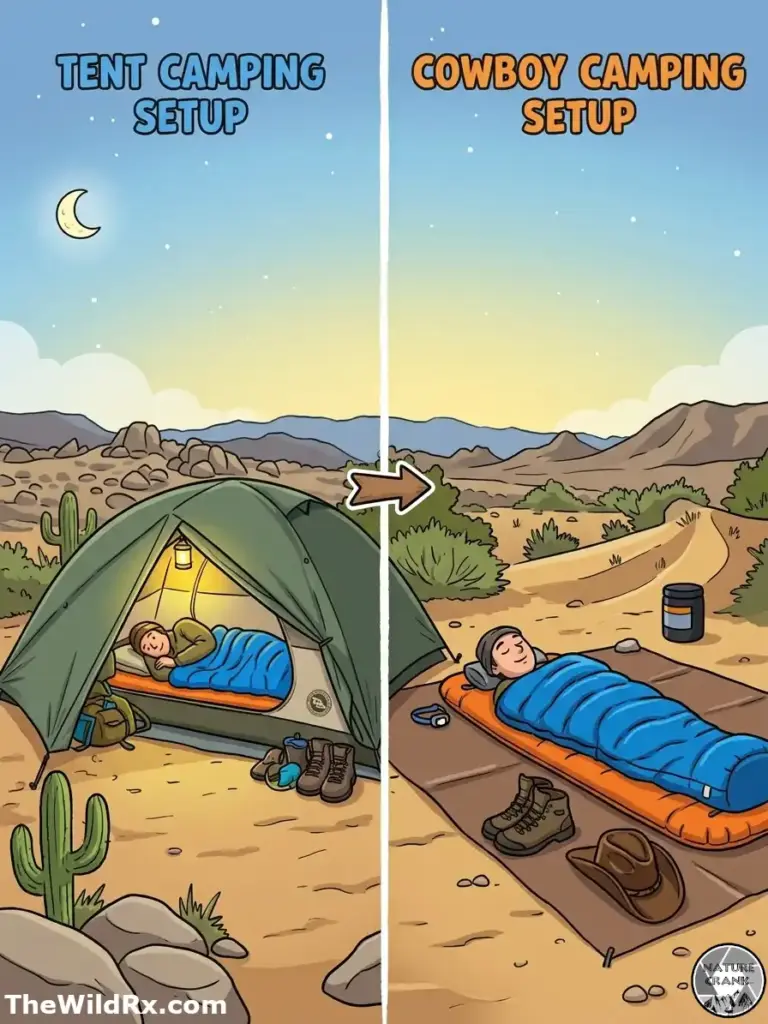
Cowboy camping vs. tent camping: A quick comparison
| Feature | Cowboy camping | Tent camping |
| Setup speed | Instant | 5–15 Minutes |
| Bug protection | Minimal (requires net/spray) | High |
| Condensation | Near zero | Variable to high |
| Psychological comfort | Low (initially) | High |
| Best environment | Arid/High desert | Forest/High humidity |
Frequently asked questions about cowboy camping
Video: Why the circle rope trick does not work
Conclusion: Ready to ditch the tent?
Cowboy camping isn’t about being “tough”—it’s about being present. There is nothing like waking up at 2:00 a.m., opening your eyes, and seeing the Milky Way framed by nothing but the pines. It’s addictive, it’s efficient, and it’ll make you wonder why you ever bothered carrying a three-pound tent in the first place.
Let’s hear your trail stories
What’s holding you back from sleeping under the stars? Or, if you’re already a convert, what’s the weirdest thing that’s happened to you while cowboy camping? Drop a comment below and let’s settle the “rope around the bedroll” debate once and for all. Share this with that one friend who refuses to leave their heavy tent at home!
Discover more from The Wild Rx aka NatureCrank™
Subscribe to get the latest posts sent to your email.