

How to poop in the woods: A 2026 guide to backcountry hygiene

Let’s be real: we all love the “great outdoors” until our digestive system decides it’s time to participate. Most hikers spend hundreds of dollars on ultralight tents but zero minutes thinking about what happens when that morning coffee hits three miles from the trailhead.
Doing your business in the wild is a skill, just like pitching a tent or navigating with a compass. If you do it wrong, you’re ruining the trail for everyone (and potentially giving a squirrel a very bad day). If you do it right, you’re a ghost. Here is how to master the art of the mountain squat.
TL;DR: How to poop in the woods properly To poop in the woods responsibly, trek 200 feet (70 steps) away from water, trails, and campsites. Dig a 6-inch deep cathole in organic soil, do your business, and pack out your toilet paper in a sealed bag. Cover the hole with natural debris to leave the area looking untouched.
Why your business is everyone’s business
It’s easy to think, “It’s just one poop, the forest is huge.” But thousands of people have that same thought. When we don’t manage our outdoor waste disposal, we end up with “toilet paper blooms”—those white flowers no one wants to pick—and contaminated water.
Having been a volunteer steward for the US Forest Service, I’ve seen these toilet paper flowers everywhere. It’s disgusting, it’s unsanitary, and it’s entirely preventable. Please, don’t be that hiker.
Poor bathroom habits can:
- Contaminate water: Spreading Giardia or E. coli into that “pristine” stream.
- Invite unwanted guests: Animals are attracted to the salt and smells, which leads to bold critters in your campsite.
- Ruined views: Nobody wants to hike to a summit only to find a used wet wipe behind a rock.
- Make pets sick: Unburried poop is sometimes eaten by not only wild animals but your pets. It could be laced with THC, which can lead to toxosis in dogs. Read more about this and hiking and camping with dogs.
Now let’s evaluate some simple steps to make yours and everyone else’s forest poops and hikes more enjoyable.
Step 1: Find your porcelain throne (minus the porcelain)
Location is everything. You want privacy, but you also need to follow the “rules of the road” to keep the ecosystem happy.
The golden rule of 200 feet
You need to be at least 200 feet (about 70 big steps) away from water sources, trails, and campsites. If you can see the water, you’re too close. This is a non-negotiable part of backcountry hygiene tips.
Look for “good” dirt
Target dark, organic soil. This dirt is full of the microbes that will actually break your waste down. Avoid:
- Sandy soil: Waste just sits there without decomposing.
- Alpine tundra: These plants are fragile and take decades to grow back.
- Dry washes: The next rain will wash your “gift” straight into the water supply.
Step 2: Dig like your reputation depends on it
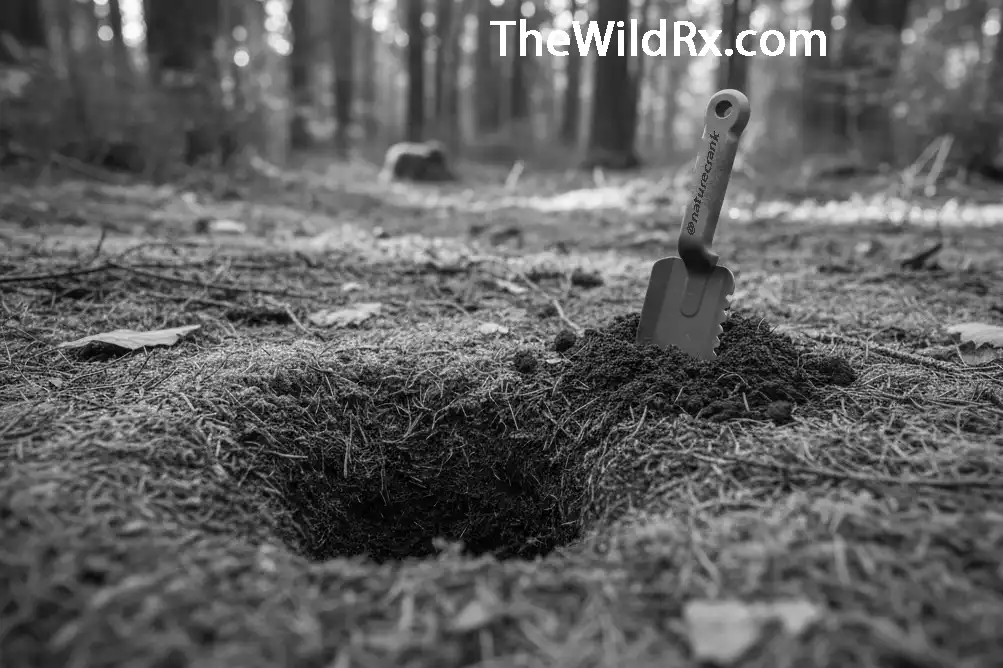
If you aren’t digging a hole, you aren’t doing it right. Learning how to dig a cathole is the gold standard for backcountry hygiene.
- The depth: Aim for 6 to 8 inches deep.
- The width: About 4 to 6 inches wide.
- The tool: Please, buy a lightweight trowel. Using a stick or a trekking pole is a desperate move that usually results in a shallow, sad hole.
Pro tip: Dig your hole before the emergency reaches “code brown.” Your future self will thank you.
Step 3: Mastering the mountain squat
This is the part they don’t show you in the gear catalogs. Gravity is your friend, but balance is your best friend.
Popular techniques
- The classic squat: Deep knee bend, heels flat if you can manage it. Keep your weight centered so you don’t tip backward.
- The tree hugger: Find a sturdy (and sap-free) sapling. Hold onto the trunk and lean back. It takes the pressure off your quads.
- The log lean: Sit on the edge of a fallen log, making sure your target area is hanging off the side and aligned with your hole.
A word of caution: Check the “splash zone” for your pants and boot laces. There is no heartbreak quite like realizing your layers were in the line of fire.
Step 4: The toilet paper dilemma
In 2026, the best practice is simple: Pack it out. Even “biodegradable” wipes can take years to break down in the wild. Animals often dig them up, creating a literal paper trail of your visit. No one likes cleaning up used toilet paper.
- The ziploc method: Use an opaque bag (duct tape the outside if you’re squeamish) to store used paper.
- Natural wipes: If you’re brave, smooth stones, large non-toxic leaves, or a snowball work surprisingly well. Just know your plants—poison ivy is a mistake you only make once.
- Don’t burn it: Trying to burn TP is a great way to start a forest fire. Just don’t.
Step 5: The disappearing act
Once the deed is done, use a stick to mix some soil into the hole (it speeds up decomposition—sorry, it’s gross but true) and fill it back in.
Tamp the dirt down and scatter some leaves or pine needles over the top. The goal is to make the ground look like it’s never been touched. If a hiker walks over that spot five minutes later, they should have no idea what lies beneath.
When a hole isn’t enough: The WAG bag
In certain fragile environments—like high deserts, slot canyons, or popular peaks—you can’t dig a hole because the environment can’t process the waste. In these areas, you’ll need a WAG bag (Waste Alleviation and Gelling).
WAG bag instructions are simple:
- Open the bag and use the target zone.
- The powder inside gels the waste and masks the odor.
- Seal it up and carry it out in your pack.
- Dispose of it in a regular trash can at the trailhead.
Always check local ranger station rules before you head out to see if a pack-out is required.
Your essential hiking bathroom kit
Don’t leave home without these four essentials:
- A lightweight trowel: (The “Deuce of Spades” is a hiker favorite).
- Toilet paper/wipes: Keep them in a waterproof bag.
- Sealable trash bags: For the used stuff.
- Hand sanitizer: High-quality sanitizer or biodegradable soap is non-negotiable.
Doing your business in the woods doesn’t have to be a disaster. With a little bit of planning and a decent squat, you can keep the wilderness looking… well, wild.
Frequently asked questions: Backcountry bathroom etiquette
Join the backcountry conversation
Mastering the “mountain squat” is a rite of passage for every hiker, but the learning curve can be… messy. By following these Leave No Trace standards, you aren’t just protecting the soil; you’re protecting the future of our favorite trails like the AT, PCT, and JMT.
Now, we want to hear from you! The hiking community thrives on shared wisdom (and the occasional “trail fail” story). Drop a comment below to help your fellow trekkers:
- What is your “must-have” item in your backcountry bathroom kit? (Are you a portable bidet convert or a “Deuce of Spades” loyalist?)
- Do you have a “code brown” horror story that taught you a valuable lesson?
- Got a question about specific trail regulations for 2026? Leave a comment below! We respond to every question to help you stay prepared for your next adventure. If you found this guide helpful, share it with your hiking partner—because no one wants to find their friend’s “toilet paper bloom” at camp.
Discover more from The Wild Rx aka NatureCrank™
Subscribe to get the latest posts sent to your email.