

What to do during rapid weather changes while hiking

Rapid weather changes catch many hikers off guard, especially in alpine zones or high-elevation terrain where conditions shift from bluebird skies to life-threatening storms in minutes. A sudden temperature drop, unexpected heavy rain, or lightning can turn a pleasant day hike into a dangerous ordeal.
Knowing how to respond to mountain weather shifts helps you prevent hypothermia, avoid lightning strikes, and navigate back to the trailhead safely. This guide covers essential mountain safety protocols, gear recommendations, and specific survival tactics for thunderstorms, sudden cold, and flash floods.
Why mountain weather changes so quickly
Mountainous terrain and elevation gain amplify weather patterns. Orographic lift—where air is forced upward by mountains—can cause clouds and precipitation to form rapidly even on otherwise clear days.
Common risks include:
- Afternoon thunderstorms: Frequent in summer months due to daytime heating.
- Cold fronts: Bringing sudden wind gusts and 20-degree temperature drops.
- Flash fog: Reducing visibility to near zero, making navigation impossible.
- Lightning: A primary threat on exposed ridges and summits.
Before heading out, always check a pinpoint forecast from the National Weather Service (NOAA) or Mountain Forecast. Look for hourly trends rather than daily averages to spot “windows” of safety.
How to read the sky: Identifying storm threats
While checking a digital forecast is essential, your eyes are your most reliable tool on the trail. Understanding cloud formations allows you to anticipate a shift in weather 20 to 30 minutes before the first drop of rain hits.
1. Towering cumulus and “anvil” tops
Watch for white, puffy clouds that begin to grow vertically. If the top of the cloud flattens out into an anvil shape (pointing in the direction the storm is moving), a thunderstorm is mature and likely producing lightning and heavy downdrafts.
2. Virga: The “phantom” rain
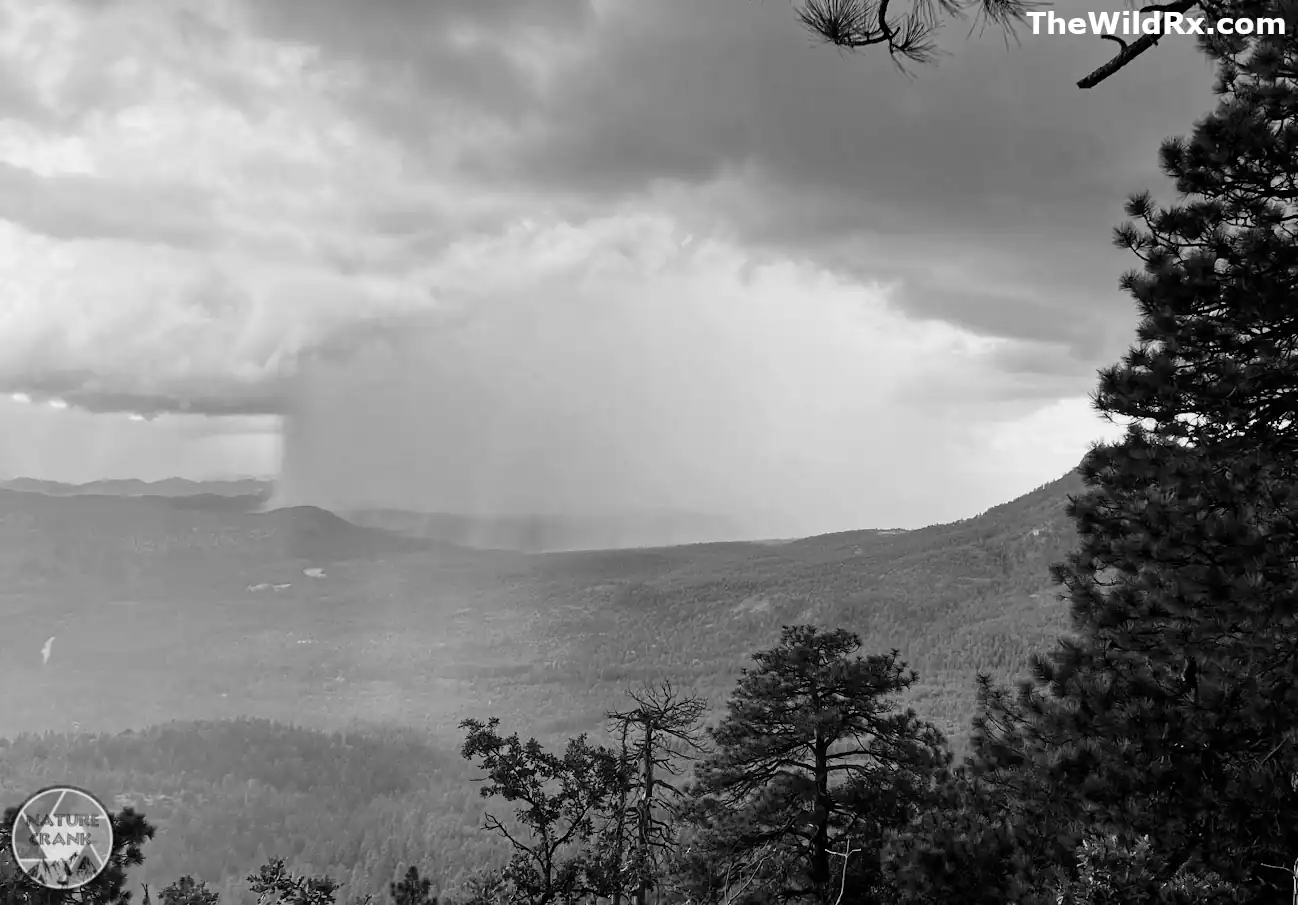
As seen in the featured image above, virga looks like gray streaks or wisps hanging from the bottom of a cloud that don’t quite reach the ground. This indicates that rain is evaporating in dry air, which often creates “microbursts”—sudden, intense gusts of cold wind that can knock a hiker off balance on narrow ridges.
3. Shelf clouds and dark bases
A low, horizontal, wedge-shaped cloud attached to the base of a thunderstorm is known as a shelf cloud. If you see this advancing toward you, it usually precedes a “squall line” with high winds and a rapid temperature drop. A localized dark or “ink-colored” cloud base is a sign of a concentrated storm cell.
4. Lightning near water
As illustrated in the photo below, lightning often strikes the highest point or the most conductive surface. Open water is a major conductor and demands shoreline safety. If you see a “bolt from the blue”—lightning that strikes far from the main rain shaft—you are already in the danger zone and should move away from shorelines or high peaks immediately.
Essential gear for unpredictable hiking conditions
You should carry the “ten essentials” regardless of the morning sun. Anyone who has section-hiked/ thru-hiked in Arizona during monsoon season, the Appalachian Trail (AT), Pacific Crest Trail (PCT), or other long hikes knows that things can get crazy quickly. These items are your primary defense against the elements:
- Moisture-wicking base layers: Stick to synthetic or merino wool. Avoid cotton at all costs—it loses all insulating properties when wet and is a fast track to hypothermia.
- Insulating mid-layer: A fleece or synthetic “puffy” jacket is best. Synthetic insulation is often superior to down in wet climates because it still traps heat even when damp.
- Waterproof outer shell: Invest in a quality breathable rain jacket and pants. This layer is just as important for blocking “wind chill” as it is for stopping rain.
- Emergency shelter: A lightweight bivy sack or a space blanket can literally save your life if a storm forces an unplanned night on the mountain.
- Navigation tools: A physical map and compass are non-negotiable. GPS batteries drain twice as fast in the cold, and touchscreens often fail in heavy rain.
- High-calorie nutrition: Pack dense snacks like nuts, chocolate, or energy bars. Your body needs extra fuel to generate internal heat when your core temperature drops.
- Illumination: A reliable headlamp with spare batteries. When clouds roll in or fog descends, trail markers become nearly impossible to see.
Need a full backpacking gear breakdown? See these guides:
Immediate steps to take when the weather turns
When you notice the wind shifting or clouds darkening, do not wait for the first drop of rain to act. Follow these survival steps:
- Stop and assess: Pause in a protected spot. Check the sky for “anvil-shaped” clouds or “virga” (rain that evaporates before hitting the ground), which signals strong downdrafts.
- Layer up early: Put on your rain shell before you get wet. Once your inner layers are soaked, preventing hypothermia becomes significantly harder.
- Evaluate your position: Are you on a ridge, a summit, or near a lone tree? If lightning is a threat, descend to lower elevation immediately.
- The “turn back” decision: If you are more than an hour from the summit and a storm is rolling in, turn around. The mountain will be there tomorrow; your safety is the priority.
- Secure your gear: Put electronics in dry bags and ensure your pack cover is on. Stow trekking poles if lightning is present.
Trail weather safety: The 30-second checklist
- Check the sky: Look for anvil clouds, virga, or darkening horizons.
- Layer up: Rain shell goes on before you are wet.
- Check your location: Are you the highest point? Get down.
- Distance: Spread the group 50 feet apart if lightning is near.
- Insulate: Sit on a foam pad or non-metal pack.
- Turn back: If you’re questioning the safety, the answer is “turn around.”
Managing specific weather hazards on the trail
| Weather scenario | Immediate action | Key safety priority |
| Lightning/Thunder | Descend from high ground; avoid tall trees. | Avoid strikes; find “lightning position.” |
| Heavy rain/Hail | Don waterproofs; secure footing on slick rocks. | Prevent hypothermia and slipping. |
| Sudden cold/Wind | Add hat, gloves, and mid-layers; eat snacks. | Maintain core body temperature. |
| Extreme heat | Seek shade; use “wet bandana” cooling. | Avoid heatstroke and dehydration. |
| Dense fog | Stop moving if the trail is lost; use GPS. | Prevent getting lost or falling off ledges. |
Thunderstorms and lightning safety
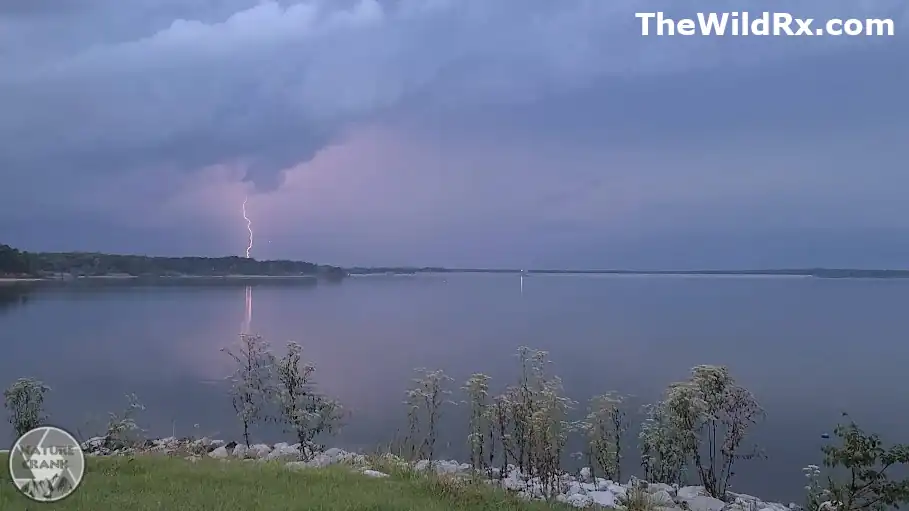
If you hear thunder, you are within striking distance. If caught above the tree line, find a low spot away from water and boulders. Spread your group out by at least 50 feet to prevent a single strike from affecting everyone. Assume the lightning position: crouch on your foam sit-pad or backpack (only if it does not have a metal internal frame) to insulate yourself from the ground, keeping your feet together.
Pro-tip: If you are hiking near a lake or river when you see lightning like the picture above, move at least 100 yards away from the water’s edge. Water doesn’t attract lightning, but it is an excellent conductor—a strike hitting the lake can travel through the water and wet ground to reach you.
Hypothermia prevention in sudden cold
Hypothermia can happen in 60°F (15.5 °C) weather if you are wet and windy. Watch for the “umbles”—mumbling, grumbling, stumbling, and fumbling. If a hiker shows these signs, stop, get them into dry clothes, and provide warm fluids immediately. For more information on backpacking in cold weather, see How to properly layer for your winter backpacking trip.
Frequently asked questions about hiking in bad weather
Conclusion
Rapid weather changes on the trail remind us that hiking demands respect for nature’s unpredictability. Preparation is the difference between a great story and a Search and Rescue call. See you on the trail—hopefully under clear skies.
Have you encountered sudden weather shifts while hiking? Share your story, closest call, or favorite tip in the comments below—I read every one and love hearing from fellow hikers.
If this guide helped you feel more prepared, please share it with your hiking group or on social media so others stay safe too.Your experiences and shares build a stronger community of trail-ready adventurers.
Discover more from The Wild Rx aka NatureCrank™
Subscribe to get the latest posts sent to your email.