

How to coexist with coyotes and wolves off-grid/RV living

Living off-grid or boondocking in an RV offers a unique connection to nature, but it requires predator-proofing your campsite. Dealing with wolves and coyotes requires a mix of caution and respect. While encounters are rare, being unprepared increases the risk to your safety and your pets.
Camping in remote wilderness doesn’t mean living in fear. I’ve encountered wolves, coyotes, bears, and snakes in camp. Here is how to reclaim your space.
Quick Tip: To keep wolves and coyotes away from your RV, the “Golden Rule” is strict attractant management. Secure all food in airtight containers, keep pets indoors at night, and use motion-activated lighting to break their comfort zone.
Understanding wolves and coyotes
Understanding how wolves and coyotes (or any wildlife) act is the first step to understanding how to reduce bad encounters.
- Wolves: Wolves are pack animals, typically more cautious and less likely to approach humans than coyotes. Encounters are rare, as wolves prefer remote areas and avoid human activity. However, they’re apex predators, so any interaction demands respect.
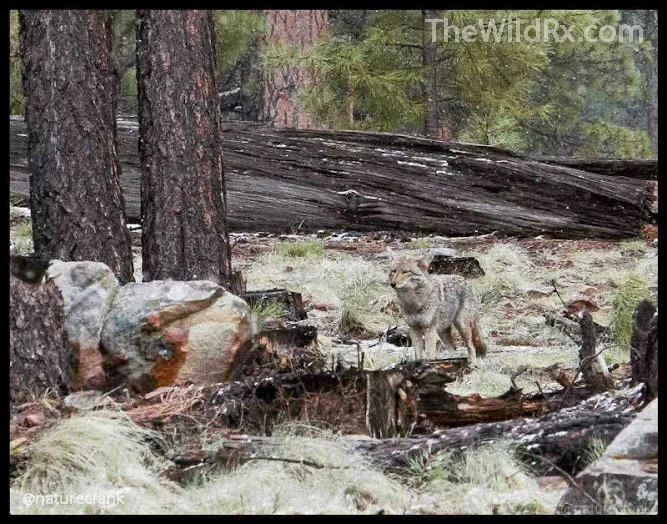
- Coyotes: Coyotes are more adaptable and opportunistic, often found near human settlements. They’re usually solitary or in small groups and pose less risk to humans, though they may be bolder, especially if food is accessible or they’re habituated. Remember, risk is generally low for both of these animals.
Identifying signs and scat
Expert boondocking safety tips always start with knowing what is sharing the trail with you. Distinguishing between a domestic dog and a wild predator is essential for assessing risk.
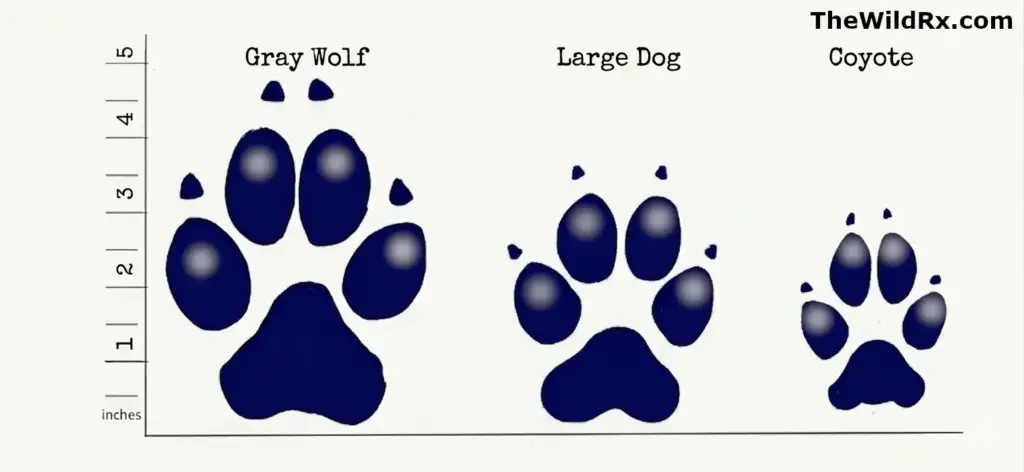
Wolf vs. coyote tracks identification
- Coyote: Compact, 2.5-inch tracks. The two inner toes are often closer together.
- Wolf: Massive, 4-5 inch tracks. If it’s the size of your palm, it’s a wolf.
Scat identification
- Wild predators (Coyote/wolf): Scat is usually ropey, tapered at the ends, and contains visible fur, bones, or fruit seeds. It is often deposited in the middle of a trail as a territorial marker.
- Domestic dogs: Scat is typically soft, tubular, and uniform in consistency due to the grains and fillers in commercial dog food.
Key differences between coyotes and wolves
| Feature | Wolf | Coyote |
| Size | Large (70–100+ lbs) | Medium (20–50 lbs) |
| Behavior | Highly cautious; avoids humans | Adaptable; may be bold |
| Sound | Deep, soulful howls | High-pitched yips and barks |
| Risk level | Extremely low (rarely seen) | Low (more likely to scavenge) |
Understanding seasonality: Peak conflict months
When off-grid living, timing is everything. While encounters can happen year-round, January and February are peak months for conflict. This is the mating season for both wolves and coyotes, making them more territorial and prone to wandering near human settlements in search of mates or scarce winter food.
During this time, predator-proofing an off-grid homestead becomes critical, as animals are more likely to take risks they might avoid in the summer.
Essential preventive measures
Prevention is crucial when living off-grid or in an RV near wolves and coyotes because it reduces the likelihood of dangerous encounters and keeps both you and the animals safe. For a complete look at protecting your campsite from all types of intruders, see “The ultimate guide to wildlife safety & pest management for off-grid RV living“.
Proactive steps like these are far easier and safer than dealing with a predator that’s already comfortable rummaging through your campsite. A big part of this is having the right gear, such as the best bear-proof and rodent-proof food storage containers for off-grid living, to ensure no scents escape your storage area.
Pro-tip: Grey water management–The hidden attractant
Many off-gridders forget that food particles in dishwater act as a scent trail. Don’t just “dump” water near your site. Dispose of it far from your sleeping area or use a sealed portable tank to prevent coyotes from scavenging near your door. This is a vital part of predator-proofing an off-grid homestead.
Stop the “dinner bell” effect
Secure food and waste.
- Airtight storage: Don’t just “store” food; use Gamma-Seal lids or bear-proof canisters. Scent is the primary driver for these animals.
- Grey water management: Dispose of grey water properly.
- Pet safety: A 6-foot leash is your best defense. In wolf country, consider a “coyote vest” (spiked vest) for small dogs if you are in a high-density area.
Store all food, trash, and scented items (like toiletries) in airtight containers or bear-proof canisters, ideally inside your RV or a locked vehicle. Coyotes and wolves are drawn to easy meals. For smaller pests that are attracted to these same scents, check out my tips on how to keep ants and spiders out of your rv: prevention and control tips.
Take your trash out daily. Period. Burn food scraps completely if allowed to avoid attracting scavengers.
Protect pets and livestock
Keep small pets (dogs, cats) inside or closely supervised, especially at dawn, dusk, or night when predators are active. Coyotes see small animals as prey, and wolves may view dogs as territorial threats. For this reason, use sturdy, predator-proof enclosures for livestock like chickens or goats. Electric fencing can deter both wolves and coyotes.
Consider always walking dogs on a leash and avoid letting them chase wildlife, as this can provoke an attack.
Campsite awareness
Choose campsites away from dense brush or known wildlife trails, which predators use for cover or travel. Also, keep your RV and the surrounding area clean and free of debris that could attract rodents, which in turn attract coyotes. If you’re struggling with smaller pests, check out my tips for dealing with mice and rats living off-grid or in an RV as well as dealing with snakes.
At night, use motion-activated lights or solar-powered lanterns or spotlights to discourage animals from approaching.
Avoid habituation
This is probably one of the most important things. You’d be surprised how many people think that it’s ok to feed wildlife and then wonder why a bear ripped through their tent, RV, or even garage doors. Learn more about preventing these dangerous situations in my guide on how to deal with bears living off-grid/RV living. Never feed wolves, coyotes, or any wildlife. Feeding makes them associate humans with food, increasing the chance of bold or aggressive behavior.
If you see a wolf or coyote, don’t approach or try to interact. Maintain distance and discourage their presence (see below).
How to handle an encounter
- If it’s a coyote:
- Be big and loud: If a coyote approaches, make yourself big and loud: wave your arms, shout, clap, or bang pots and pans. Most coyotes will flee.
- Assert dominance: Throw sticks or small rocks near (not at) the coyote to reinforce that humans are a threat.
- Use tools: Carry a walking stick or an air horn for deterrence during hikes.
- If a coyote seems unafraid or follows you, it may be habituated—leave the area and report it to local wildlife authorities.
- If it’s a wolf:
- Don’t run: Wolf encounters are rarer but more serious. If you see a wolf, stay calm, stand tall, and back away slowly while facing it. Do not run, as this can trigger a chase instinct.
- Group Up: If you have children or pets, bring them to the center of your group immediately. Make loud noises, and throw objects to scare it off.
- Eye contact: Keep eye contact, but avoid prolonged staring, which can be seen as a challenge.
- Carry deterrents
- Bear spray is effective against both wolves and coyotes. Practice using it beforehand and keep it accessible (not buried in a backpack).
- A loud whistle or air horn can startle animals and alert others to your location.
- In areas with known wolf activity, some off-gridders carry a firearm (think Alaska — wolves and grizzly bears), but check local laws and prioritize non-lethal methods.
How to effectively haze a habituated coyote
If a coyote lingers near your camp, it has likely become “habituated”—meaning it has lost its natural fear of humans. To fix this, you must practice hazing. Hazing is a method recommended by wildlife agencies to “re-train” an animal to stay away.
- Be aggressive, not passive: Don’t just wave; yell “Go away coyote!” in a deep, firm voice.
- Use noise makers: Air horns and whistles are the best coyote deterrents for campers because they provide a high-decibel shock that disrupts the animal’s comfort.
- Maintain eye contact: Never turn your back while hazing; it signals submissiveness.
- Vary your methods: If you always use a whistle, they may get used to it. Switch to throwing a tennis ball or using a squirt gun (if close enough).
Additional tips
- Know your area: Research local wildlife patterns before settling in. Contact local rangers or wildlife agencies for info on wolf or coyote activity. Wolves are more common in places like the Rockies, Great Lakes region, or Alaska, while coyotes are widespread across North America. Learn to recognize tracks, scat, and signs of predator activity around your campsite.
- Travel in groups: If hiking or exploring, go with others. Wolves and coyotes are less likely to approach groups than solitary individuals.
- Seasonal awareness: Spring (pup-rearing season) can make coyotes and wolves more defensive. Fall and winter, when food is scarcer, may increase scavenging near campsites.
- Respect their space: If you spot a den or kill site (e.g., a carcass), leave immediately. Wolves may defend their territory, and coyotes can be protective of food sources.
When to seek help
- Report bold or aggressive behavior (e.g., animals lingering near your RV despite deterrence) to local wildlife authorities or park rangers. They can assess if the animal is habituated or a threat.
- If an animal attacks (extremely rare), fight back aggressively with any available tool and seek medical attention immediately.
WIldlife safety: Frequently asked questions
Conclusion
Coexisting with wolves and coyotes while living off-grid or in an RV boils down to preparation, awareness, and respect for their natural instincts. By securing food and waste, protecting pets and livestock, maintaining a clean campsite, and avoiding habituation, you significantly reduce the chances of unwanted encounters.
When interactions do occur, confident deterrence tactics and the right tools—like bear spray or noise-makers—can keep both you and the animals safe. Ultimately, living harmoniously with these predators means staying proactive and informed, ensuring your off-grid adventure remains a rewarding experience without compromising the wildlife around you.
Discover more from The Wild Rx aka NatureCrank™
Subscribe to get the latest posts sent to your email.