


Trail runners, boots, minimalist, or barefoot: Finding your ultimate hiking footwear

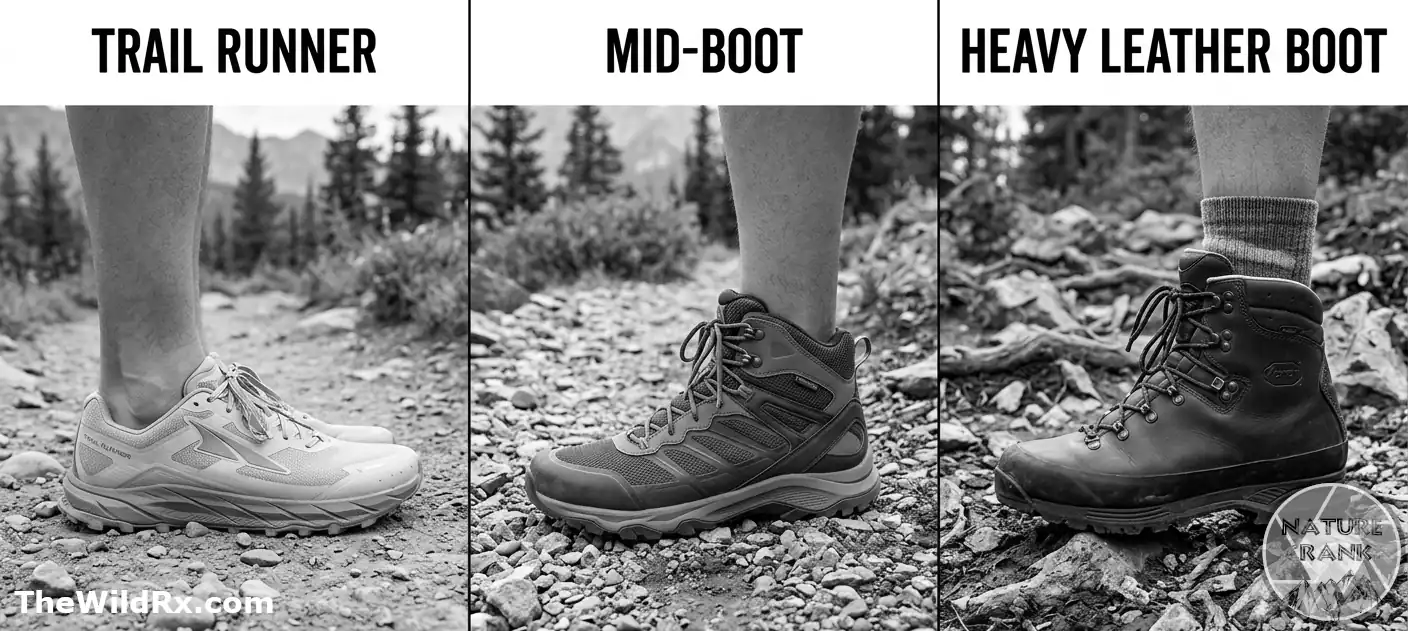
Choosing between trail runners, mid-boots, and heavy leather boots is the most important gear decision a hiker makes. The “right” choice isn’t universal; it depends on your pack weight, the ruggedness of the terrain, and your personal ankle strength.
While traditional wisdom suggests heavy boots for all hikers, the rise of ultralight backpacking has moved many toward breathable trail runners. This guide breaks down the technical differences to help you find your perfect match.
Breaking down the different types of hiking footwear
- Trail runners: These are low-cut shoes designed for running on technical terrain. They prioritize a lightweight build, maximum breathability, and flexible midsoles.
- Mid-height boots: Often called “hiking shoes,” these sit just above the ankle. They provide a middle ground, offering more debris protection than a runner but less weight than a traditional boot.
- Heavy leather boots: Built with full-grain leather and stiff outsoles, these are designed for maximum stability. They feature high ankle cuffs and are the standard for off-trail travel or heavy load-bearing.
- Minimalist and barefoot shoes: A specialized category for those seeking a “natural” gait. These feature zero-drop soles and wide toe boxes to mimic barefoot movement while providing basic protection from the elements.
Note: Because minimalist footwear requires a unique transition period and specific foot strength, I have dedicated a full section to barefoot hiking and how it handles water crossings at the end of this article.
Comparison: Trail runners vs. mid-boots vs. heavy boots
| Feature | Trail runners | Mid-height boots | Heavy leather boots |
| Average weight | Under 1 lb per pair | 1.5 – 2.5 lbs per pair | 3+ lbs per pair |
| Ankle stability | Minimal (relies on leg strength) | Moderate mechanical support | Maximum support and stiffness |
| Protection | Basic toe caps | Rubber rands and rock plates | Full-grain leather armor |
| Durability | 300–500 miles | 500–700 miles | 1,000+ miles (often resolable) |
| Best use case | Fastpacking and dry summer hikes | Weekend backpacking trips | Mountaineering and heavy packs |
When to choose trail runners for hiking
Trail runners are ideal for hikers who prioritize agility and energy efficiency. Because “a pound on your feet equals five on your back,” wearing lighter shoes significantly reduces leg fatigue over long distances.
Choose trail runners if:
- You are carrying a base weight under 20 lbs.
- You are hiking on well-maintained trails like the PCT or AT. Just be warned, they do wear down fast. Expect to buy a new pair every 300–500 miles, depending on the terrain. I’ve gone through my share of trail runners and light hikers, but my heavy boots are the only things that have survived more than a couple of seasons. In one particularly brutal, rocky stretch of the Appalachian Trail, I actually blew through a pair of shoes in a single week! If you’re hiking on abrasive granite or volcanic rock, expect those soft rubber lugs to round off even faster. This is a critical factor when you plan a thru-hike, as your footwear budget is just as important as your permits and resupply strategy.
- You prefer a fast-drying shoe over a waterproof one. Non-waterproof mesh trail runners drain water quickly after stream crossings, whereas boots can stay damp for days.
- Personal preference: We all have different preferences and tolerances, and these may change with age. I used to be a trail runner purist until a trip to the Sandia Mountains in New Mexico changed my mind. After 15 miles of rock hopping, my arches were screaming. Now, I save the runners for dirt and bring the boots for the rocky areas.
- Key benefit: Increased proprioception (the ability to feel the ground), which helps prevent stumbles on technical roots and rocks.
When mid-boots make the best choice
Mid-height boots are the versatile “quiver-of-one” for the average hiker. They offer a thicker midsole than runners, which protects the bottom of your feet from “bruising” on sharp rocks during high-mileage days. They also provide the stability needed when carrying the backpacking tents and sleep systems over rocky terrain without the extreme weight of a traditional leather boot.
Choose mid-boots if:
- You need protection from scree and debris entering your shoe.
- You are carrying a moderate pack (25–35 lbs).
- You want a shorter break-in period than leather but more structure than a sneaker.
- Key benefit: Added lateral stiffness helps keep the foot level on uneven side-hill terrain.
When heavy leather boots are worth the weight
Despite the trend toward lighter gear, heavy leather boots remain the standard for harsh environments. Their stiff construction provides a stable platform that prevents the foot from wrapping around sharp rocks, saving your arches from strain.
Choose heavy leather boots if:
- You are trekking off-trail through thick brush or over sharp volcanic rock.
- You are carrying a heavy pack (40+ lbs) or a child carrier. Supporting that extra weight is a core part of your backcountry safety, ensuring you don’t suffer a debilitating foot injury miles away from the nearest trailhead.
- You hike in cold, snowy, or muddy conditions where a waterproof Gore-Tex membrane and insulation are required.
- Key benefit: Extreme longevity. A high-quality pair of leather boots can be resoled by a cobbler, lasting a decade or more with proper conditioning.
Essential factors for footwear selection
- Terrain and conditions: Smooth dirt paths favor the flexibility of a runner. Rocky, muddy, or snowy paths require the deep lugs and stiff soles found on boots.
- Individual biomechanics: If you have a history of chronic ankle instability, the mechanical support of a high-top boot provides a safety margin that a low-cut shoe cannot.
- Pack weight and distance: Match your footwear to your pack weight and hike length. Remember that as your mileage increases, so does your caloric need. Balancing your gear weight with proper meal planning and calorie calculations is the secret to a successful multi-day trip.
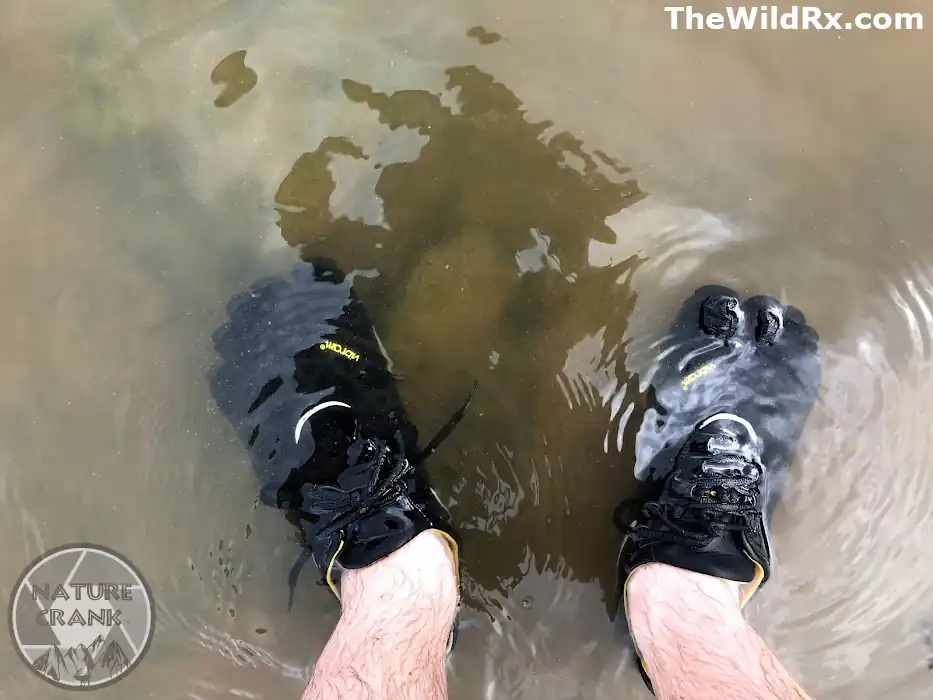
- Moisture management: In hot climates, breathable mesh is vital to prevent blisters caused by sweaty feet. In alpine environments, moisture-wicking socks paired with waterproof leather are necessary to prevent frostbite. I often switch to Vibram FiveFingers (thick soles) when going through wet areas so that my primary hiking shoes stay dry.
The rise of minimalist and barefoot hiking shoes
In recent years, a fourth category has gained a loyal following: minimalist or “barefoot” footwear. These shoes, such as the Vibram FiveFingers or zero-drop trail shoes, aim to mimic the natural movement of the human foot by stripping away the heavy cushioning and rigid support found in traditional boots.
While they may look unconventional, they offer a unique set of benefits for specific types of hikers:
- Maximum proprioception: You feel every rock and root, allowing your brain to react instantly to the terrain.
- Natural foot splay: Most minimalist shoes feature a wide toe box, which prevents the common hiking issue of pinched toes and bunions.
- Rapid drainage: As seen in the water crossing example, these shoes don’t “hold” water. Because they lack thick foam or heavy leather, they drain and dry almost instantly compared to a waterproof boot. However, keeping your feet dry is only half the battle; ensuring your drinking supply is clean is the other. Check out our guide to water safety and filters to stay hydrated while you’re managing those creek crossings.
Who should choose minimalist shoes?
- Hikers who have spent time strengthening their arches and calves.
- Those who prefer a “natural” gait and want to eliminate the elevated heel found in most boots.
- Fastpackers who prioritize the absolute lightest weight possible for river crossings and technical scrambles.
The reality of minimalist hiking: Minimalist shoes provide zero mechanical support. If you have weak ankles or are carrying a pack over 25 lbs, the lack of a rock plate or cushion can lead to foot fatigue and “stone bruises” on long, rocky days.
Frequently asked questions about hiking footwear
Final thoughts on choosing your hiking footwear
There is no “perfect” shoe, only the right tool for the specific trail. For most day hikers on established paths, a trail runner or lightweight mid-boot offers the best balance of comfort and performance. If your adventures take you deep into the backcountry with a heavy load, the stability of a heavy leather boot remains an unbeatable asset. Protecting your physical comfort is a huge part of managing thru-hiker mental health, as gear failures and foot pain are leading causes of ‘trail blues’ and early departures.
Visit a local outfitter to try on several brands, as the “last” (the shape of the shoe) varies significantly between manufacturers.
Join the debate: What is on your feet?
The “boots vs. trail runners” conversation is one of the most heated debates in the outdoor world, and we want to hear your perspective.
- Are you a die-hard leather boot fan who values longevity?
- Or have you made the switch to ultralight trail runners and never looked back?
- Are you a barefoot hiker? Tell us about your experiences.
Drop a comment below and tell us which model you’re currently wearing and why it works (or doesn’t work) for your local trails. If you found this breakdown helpful, share it with your hiking group—it might just save someone from a very uncomfortable weekend in the woods!
Discover more from The Wild Rx aka NatureCrank™
Subscribe to get the latest posts sent to your email.