

Best diesel heaters for RVs in 2026: Setup, troubleshooting, and safety guide


Staying warm while dry camping or boondocking requires an efficient, reliable heat source. While many rigs come with propane furnaces, diesel air heaters have become more and more popular for off-grid winter travel. This guide covers everything from choosing the right unit to advanced troubleshooting for a cozy, safe winter season.
Why diesel heaters are a winner in winter
Standard propane furnaces are notorious for high power consumption and heavy moisture production. A 12V diesel air heater pulls cold air from outside, heats it via a sealed combustion chamber, and exhausts the fumes externally. This results in dry, consistent heat that prevents interior condensation and window fogging—the two biggest enemies of RV longevity.
Comparing the best diesel heaters of 2026
When shopping for an RV heating solution, you’ll generally choose between premium European brands and the more budget-friendly “Chinese diesel heaters” like Vevor. While budget units are popular, premium units follow strict guidelines like those in the official Webasto Air Top installation manual, which sets the industry benchmark for safety clearances.
| Feature | Premium brands (Webasto/Espar) | Mid-range leaders (LF Bros/Hcalory) | Budget leader (Vevor) |
| Price point | $800 – $1,500+ | $195 – $300 | $100 – $220 |
| Reliability | Industrial grade; 10+ year life | High (2026 app-controlled units) | Moderate to high (requires setup) |
| Altitude kits | Automatic (standard) | Automatic sensors (standard) | Manual “secret menu” adjustment (check YouTube for your brand) |
| Support | Dealer network / warranties | Limited online support | DIY / community-based support |
Pro tip from experience: I personally use a Vevor diesel heater. While the major brands offer a “set it and forget it” experience, the Vevor has proven to be incredibly reliable at a fraction of the cost—provided you take the time to do the installation correctly.
Step-by-step: The ultimate RV diesel heater setup safety guide
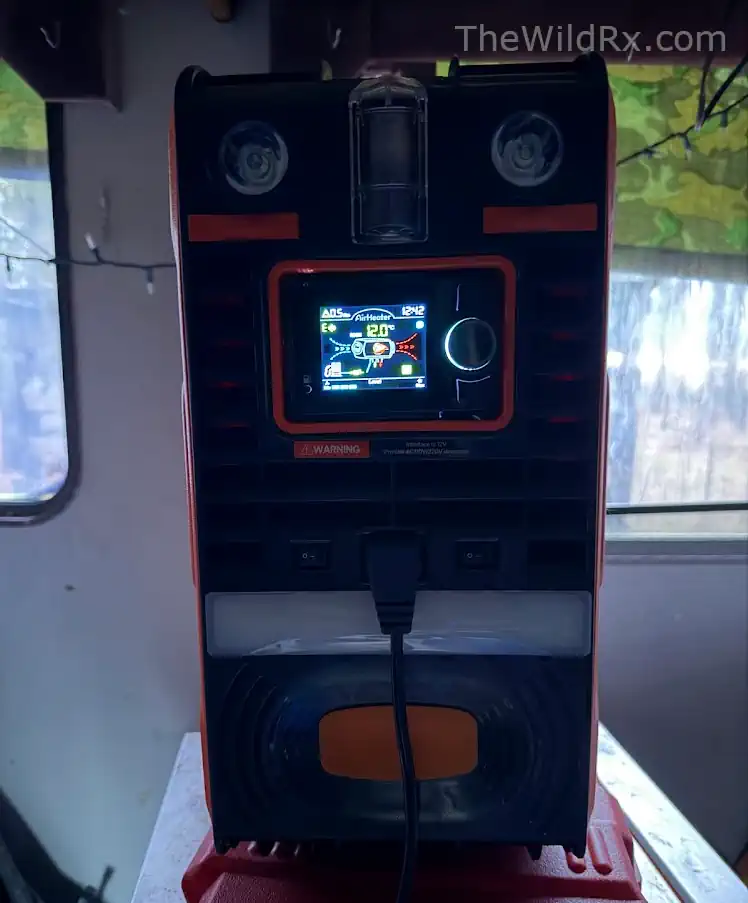
A proper installation ensures both efficiency and electrical safety. I won’t talk about the actually process as that is in a video below, but these are very important safety aspects you need to first know.
- The turret mount: Don’t just drill a hole in your floor. Use a metal turret mounting plate. This creates a heat barrier between the heater and your RV’s flooring.
- Fuel line upgrade: Many budget heaters come with soft green fuel lines. For a “best in class” setup, replace these with stiff nylon lines to prevent fuel pulsing and air bubbles.
- The 45° pump rule: Mount your fuel pump at a 45-degree angle with the outlet (the side going to the heater) pointing upward. This allows air bubbles to pass through the pump chamber, preventing ‘air-lock’ flameouts and reducing the mechanical stress that causes the loud ‘ticking’ sound.
- Exhaust safety: Always route the exhaust pipe to the side or rear of the vehicle, never underneath a slide-out where fumes can collect. Use High-Temp RTV Silicone to seal all exhaust joins.
- Intake/exhaust separation: Ensure your air intake pipe and exhaust pipe are not pointing toward each other. If the intake “inhales” its own exhaust, the heater will oxygen-starve, soot up rapidly, and potentially fail. Aim them in opposite directions or on opposite sides of the frame rail.
Sizing your heater: Is bigger actually better?
One of the most common mistakes in off-grid builds is “over-sizing” the heater. Unlike a home furnace, bigger is rarely better when it comes to diesel air units.
The 2kW vs. 5kW comparison
- 2kW Units: Best for campervans (Sprinters, Transits), small truck campers, and highly insulated trailers. They are fuel-sippers and run “hot and fast,” which is ideal for longevity.
- 5kW Units: Best for 20ft+ trailers, toy haulers, or school bus conversions (Skoolies). These move more air but require more space for ducting.
- 8kW Units: A Note of Caution. Many “8kW” heaters sold on budget sites are actually just 5kW units with the fuel pump frequency turned up. They often run too rich and soot up quickly.
The danger of “short-cycling”
Installing a 5kW heater in a small van often leads to short-cycling, where the unit constantly reaches its target temperature and shuts down. This prevents the unit from ever reaching its self-cleaning temperature, leading to a clogged burner within weeks.
Quick sizing calculator chart
Use this table to find your ideal unit based on vehicle volume and insulation quality:
| Vehicle Type | Size/Length | Insulation Level | Recommended Heater |
| Small van/Truck bed | < 12 ft | Low to High | 2kW |
| Large van (Sprinter/Transit) | 14 – 17 ft | Professional/thick | 2kW |
| Large van (Sprinter/Transit) | 14 – 17 ft | Poor/Glass windows | 5kW |
| Travel trailer / Skoolie | 20 – 30 ft | Moderate | 5kW |
| Large RV / Toy hauler | 30 ft + | High | 5kW (or dual 2kWs) |
Expert recommendation: It is almost always better to run a 2kW heater on “High” than a 5kW heater on “Low.” High combustion temperatures keep the glow plug screen clean and prevent the carbon buildup that causes the dreaded “failed start” error codes.
Preventing diesel gelling in extreme cold
If you are dry camping in temperatures below 15°F (-9°C), standard diesel can turn into a waxy gel, clogging your heater’s thin fuel lines.
- The Fix: Use a dedicated winter blend or add an anti-gel treatment like Power Service Diesel Fuel Supplement.
- If using an external plastic fuel tank (common with budget kits), ensure it is mounted in a spot shielded from direct wind chill, as fuel in an exposed tank will gel significantly faster than fuel stored in a vehicle’s main chassis tank.
- Kerosene alternative: In extreme sub-zero conditions, running a 50/50 mix of diesel and kerosene will lower the fuel’s cloud point and keep your heater running smoothly.
Summer maintenance tip: Don’t let your heater sit idle all summer. Stagnant diesel in the lines can degrade. Run your heater for 15 minutes once a month, even in July, to keep the fuel pump lubricated and the fuel lines primed.
Troubleshooting common diesel heater problems
If your heater fails to start, it will usually throw an error code on the LCD. Here is how to fix the most common issues:
Why is my diesel heater blowing white smoke?
White smoke is unburnt fuel. This usually happens if the heater tried to start but failed to ignite.
- The fix: Check your battery voltage. If the glow plug doesn’t get enough power, it won’t get hot enough to ignite the fuel. Run the startup cycle again once your batteries are fully charged.
Fixing “Error E-01” or “Error E-02” (Voltage issues)
These are the most common errors for RVers. E-01 indicates voltage drop, while E-03 often signals a glow plug failure usually caused by insufficient startup current.
- The fix: To prevent voltage drop, ensure your wiring meets SAE J1128 standards for low-voltage primary cable. This ensures the insulation can handle the heat and the wire gauge can handle the 10A startup surge. This is typically 10 AWG or 12 AWG wiring.
How to stop the “ticking” noise
The fuel pump “ticking” can be annoying at night.
- The fix: Replace the stock plastic clip with a rubber-insulated P-clip. This decouples the vibration from the RV chassis, making the heater nearly silent.
Critical electrical safety for your heater
Because your diesel heater is integrated into your 12V house system, it must be treated with the same respect as any high-draw appliance. For the safest DIY build, your installation should align with the NFPA 1192 Standard on Recreational Vehicles, which outlines the 2026 requirements for fuel-burning appliances and carbon monoxide detection.
- Dedicated fusing: Always use a 20A inline fuse close to the battery source.
- Avoid “sharing” circuits: Never tap into a lighting circuit for your heater. The startup draw is high enough to melt thin wires or pop fuses elsewhere.
- Chassis grounding: Ensure your heater is grounded to a common bus bar or the chassis. With the high startup current of the glow plug, a poor ground can cause voltage spikes that interfere with other sensitive RV electronics or solar charge controllers.
- Carbon monoxide safety: No matter how confident you are in your install, you must install a CO detector. Familiarize yourself with the CDC’s clinical guidance on carbon monoxide poisoning to recognize early symptoms like dizziness or nausea that often mimic the flu.
Related reading: For a deep dive into wiring, wire gauges, and protecting your rig from fire, see our companion guide on Proper fusing, breakers, and bus bars and other safety tips.
Diesel heater maintenance schedule (2026 edition)
To ensure your heater doesn’t fail on the coldest night of the year, follow this routine. Budget heaters (Vevor/Hcalory) require slightly more attention to the combustion chamber than premium brands.
Monthly (even in summer)
- The 15-minute exercise: Run the heater on High for at least 15 minutes. This prevents the fuel in the lines from degrading and keeps the internal fuel pump seals lubricated.
- Battery health check: Ensure your 12V connections are tight. A loose terminal causes the “voltage drop” that triggers E-01/E-02 errors during the glow plug’s high-amp startup.
Every 3–6 months (or 500 hours)
- Fuel filter inspection: Look for sediment or clouding in the clear fuel filter. If you see debris, replace it immediately to prevent fuel pump failure.
- Intake/exhaust clearout: Check the external pipes for spider webs, mud dauber nests, or road debris. A partial blockage leads to a “rich” burn and rapid soot buildup.
- The “carbon burn-off”: Run the heater on its maximum setting for 30–60 minutes. This is the single best way to incinerate carbon soot before it hardens on the burner mesh.
Annual “deep clean”
- Glow plug screen: Remove the glow plug and inspect the atomizing screen. If it’s charred or black, replace it (these are usually $5–$10).
- Air ducting: Ensure your interior heat vents aren’t crushed or blocked. Restricting airflow causes the internal “overheat” sensor to trip.
Pro tip: Keep a “spare parts kit” in your rig. At a minimum, carry a spare glow plug, a glow plug wrench, and a replacement internal screen. These three items account for 90% of mid-winter “no-start” failures.
Frequently asked questions (FAQs) about diesel heaters
Is a diesel heater right for you rig?
Choosing between a premium brand and a budget-friendly Vevor comes down to your comfort level with DIY maintenance. While the high-end units offer “set it and forget it” peace of mind, my experience shows that a properly installed budget heater is a powerhouse for off-grid living.
You can turn even the most brutal sub-zero nights into a cozy evening by the “fire.” Just ask Lady Midnight; as long as the window is clear and the floor is warm, she’s a happy camper.
What’s your winter rig setup? Are you a die-hard propane user, or have you made the switch to a diesel air heater? If you’ve run into a specific error code or have a clever mounting trick I didn’t cover here, drop a comment below!
Discover more from The Wild Rx aka NatureCrank™
Subscribe to get the latest posts sent to your email.