

Environmental impacts of full-time RVing and how to minimize them

Full-time RVing offers a liberating, mobile lifestyle with significantly smaller living spaces, but it comes with a unique set of environmental trade-offs. You might be wondering: Is trading a brick-and-mortar foundation for wheels actually green?
The short answer is: it depends on your right foot. Many full-timers achieve a lower overall carbon footprint than traditional homeowners due to radically reduced resource use. Others, however, spike their emissions through non-stop cross-country travel. Understanding the environmental impact of RV living helps you make intentional choices so you can enjoy the open road without leaving a trail of ecological destruction behind you.
Key environmental impacts of full-time RV living
Like any lifestyle, sustainable living on wheels has its pros and cons. Let’s break down where the RV lifestyle shines and where it hits some major speed bumps.
Positive impacts: The smaller footprint of rolling minimalism
- Radically lower energy and water consumption: The average U.S. home sits at around 1700+ square feet. An RV? Usually a cozy 150 to 400 square feet. Because you aren’t heating, cooling, or lighting empty guest rooms, RV dwellers regularly use 50% to 60% less electricity than traditional households. Water use drops even more drastically—often by over 90%—simply because your tanks force you to be conscious of every drop.
- Forced minimalism and reduced waste: When your entire life fits into a vehicle, target runs lose their appeal. Smaller spaces naturally discourage mindless consumerism, leading to fewer purchases, less packaging waste, and fewer items heading to the landfill.
- Lower infrastructure demands: Traditional housing development clears land and pours massive amounts of concrete. Living in a movable home reduces the long-term demand for permanent building materials and residential land use.
Negative impacts: The ecological cost of the open road
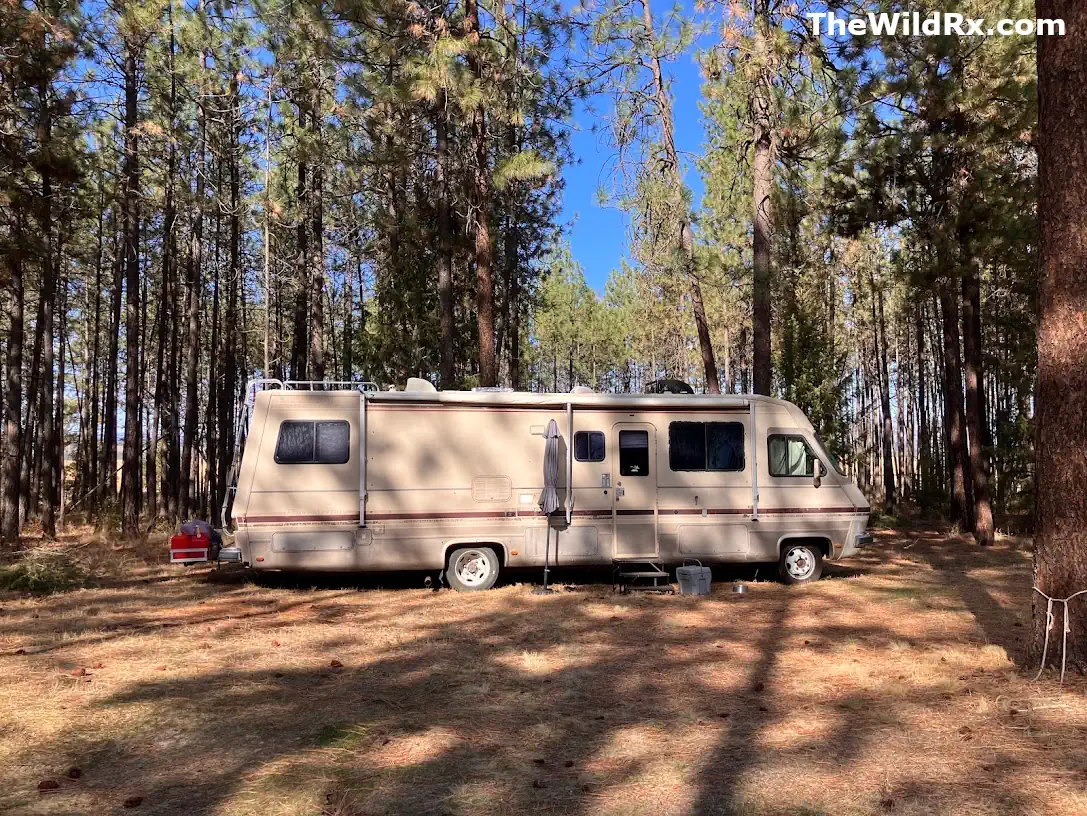
- Fuel consumption and greenhouse gas emissions: Let’s address the elephant in the campground. Driving a rig—especially a massive Class A motorhome getting single-digit MPG—burns a lot of fuel. My beast of an RV gets 6 mpg. If you change your backyard every three days, your vehicle emissions will quickly wipe out any carbon savings you gained from living in a smaller space.
- Waste management challenges: Mishandling grey and black water tanks doesn’t just ruin your weekend—it pollutes local water sources and soil. Additionally, a reliance on single-use plastics due to limited dishwashing space can quietly drive up your plastic footprint.
- Land and wildlife disruption: High traffic at popular boondocking locations can cause soil erosion, stress local wildlife, and crowd out fragile ecosystems.
- Manufacturing and disposal: Houses can last centuries. RVs generally have a lifespan of 20 to 30 years. Because they are built with complex composites and plastics, they are notoriously difficult to recycle at the end of their lifecycle.
Pro-tip: Stationary or slow-travel RVing is almost always more environmentally friendly than traditional house living. The secret to green RVing isn’t stopping travel altogether; it’s simply slowing down.
Eco-friendly RV living vs. traditional housing
How do the numbers actually stack up? Here is how a typical full-time RVer compares to the average American household.
| Resource metric | Full-time RV lifestyle (average) | Traditional U.S. home (average) | Why the difference matters |
| Annual electricity use | 4,500 – 6,000 kWh | 10,500+ kWh | Micro-spaces require significantly less climate control. |
| Annual water consumption | 8,000 – 15,000 gallons | 100,000 to 120,000 gallons | Limited tank capacities naturally cure long, wasteful showers. |
| Average living space | 150 – 400 sq. ft. | 1700+ sq. ft. | Less physical space limits material consumption. |
| Travel emissions | High to very high | Low to moderate | RV emissions depend entirely on your annual mileage. |
| Daily waste production | Generally lower | Generally higher | Minimalism reduces packaging and unnecessary buying habits. |
How to minimize environmental impacts while full-time RVing
If you are ready to transition to a sustainable RV lifestyle, you don’t need to trade your rig for a tent. Practical upgrades and smarter habits can drastically curb your environmental footprint.
1. Optimize your energy setup
- Invest in solar power: Installing solar panels paired with lithium batteries is the ultimate way to cut your reliance on fossil-fuel-guzzling generators and coal-powered campground grids.
- Upgrade to LEDs: Swap out any lingering incandescent bulbs for LEDs. They use a fraction of the power and draw less heat, keeping your rig cooler. Check Amazon for replacement bulbs, as they are often much cheaper than Home Depot or Lowe’s.
- Use passive climate control: Use your wheels to your advantage. Follow the good weather, park under natural shade, and use reflective window covers to block out the summer heat before your AC has to fight it. For more info on fighting the weather, see my RV weather safety guide: How to survive extreme heat, cold, and high winds.
2. Practice slow travel to maximize fuel efficiency
- Embrace the “2-2-2 rule”: Drive no more than 200 miles a day, arrive by 2:00 PM, and stay for at least two weeks (or longer!). Staying parked longer reduces emissions and gives you time to actually enjoy your destination.
- Maintain your rig: Under-inflated tires and dirty air filters drag down your fuel efficiency. Keep your tow vehicle or motorhome properly maintained to squeeze every single mile out of your tank.
- Lighten the load: Clean out your basement storage. Carrying around heavy gear you haven’t used in six months forces your engine to work harder and burn more fuel.
3. Conserve water and manage waste like a pro
- Install low-flow fixtures: Oxygenated showerheads give you great water pressure while using a fraction of the gallons.
- Switch to a composting toilet: If you want to skip the black tank completely, a composting toilet eliminates water use entirely for waste management and makes off-grid living much easier.
- Dump responsibly: Never, ever dump grey or black water anywhere other than an approved dump station. Use biodegradable, tank-safe treatments to keep the plumbing ecosystem happy.
To learn more about water conservation and challenges, see my post, Water challenges off-grid camping — The RV life.
4. Ditch single-use plastics
- Choose reusables: It’s tempting to use paper plates to save water, but the landfill trade-off isn’t worth it. Use real dishes and practice the “two-pan” washing method to conserve water instead.
- Buy biodegradable soaps: When boondocking, whatever goes down your sink can end up close to the soil. Use plant-based, biodegradable soaps for dishes and body wash.
Long-term sustainability tips for full-time RVers
- Upgrade your rig gradually: You don’t need a $10,000 eco-overhaul on day one. Start by switching out your light bulbs, then look into a portable solar panel setup, and gradually upgrade your insulation or appliances over time.
- Track your consumption metrics: Use tank monitors and smart battery apps to see exactly how much water and power you consume daily. It is much easier to reduce your impact when you can see the data in real-time.
- Chassis choice matters: If you haven’t purchased a rig yet, consider a smaller camper van, class C, or a lightweight travel trailer. Smaller rigs naturally open up more eco-friendly travel opportunities and require less fuel to move.
Frequently asked questions about sustainable RV living
Conclusion
Full-time RVing is not a zero-emission pass to travel guilt-free, but it gives you a rare level of control over your environmental footprint. When you step out of a sprawling traditional house and into a micro-living space, you naturally slash your water and energy use. The ultimate environmental impact of your mobile life comes down to how often you move your wheels and how intentionally you upgrade your rig.
By embracing a slow-travel mindset, investing in renewable solar energy, and practicing strict Leave No Trace principles, you can easily maintain a carbon footprint that is significantly smaller than the average suburban household. Sustainable RV living does not require a massive lifestyle overhaul on day one—it just takes a commitment to constant, incremental improvements. Pick one eco-friendly change to tackle this week, whether that means upgrading your light bulbs or mapping out a longer stay at your next destination, and enjoy a cleaner, greener journey ahead.
Pass it on: Help keep our public lands green
Found these sustainability tips helpful for your upcoming adventures? The RV community thrives on shared knowledge. Consider sharing this article on Facebook, Pinterest, or your favorite RV forums to help fellow travelers minimize their footprints, protect fragile public boondocking spaces, and keep our campgrounds pristine for generations to come. Safe travels!
Discover more from The Wild Rx aka NatureCrank™
Subscribe to get the latest posts sent to your email.