

The “Beast” and the high desert: When things fall apart on the road

When things fall apart: RV mechanical troubles
Keeping the faith when you’re stranded in the middle of nowhere is pretty hard. Two summers prior, I was broken down in “The Beast” (My RV) in the Sonoran Desert north of Phoenix. After thinking it was fixed, I broke down again in the high desert. Nevertheless, an RV can become a “hot box”, with temperatures reaching peaks of around 120–130°F (49-54°C) depending on the outside weather. Luckily, the high desert is cooler than the Phoenix Valley.
The previous owner claimed he had replaced all the fuel lines, but that was far from the truth. When he had taken the tank down to clean it, he pinched a line against the chassis, causing a major leak. I lost nearly $300 in fuel and had to replace all the lines, the fuel pump, and add a secondary frame-rail pump and new fuel filters before I could continue.
Stranded in the heat and the unlikely Samaritans
After continuing about 20 miles, the throttle/accelerator cable snapped. This proved to be a major issue because getting certain parts for an RV from 1987 can be difficult. We finally got to our destination in September after initially trying to leave at the end of April.
Two men helped me the most. One man spotted me the money and followed me from the valley—of course, having to leave me in Rye, Arizona, when I broke down the second time. But we got off the highway, and I was able to move to a safe camping place as opposed to being stranded on the side of a four-lane highway on a hill. This man is not a Christian and actually says that he thinks of God more as Santa Claus.
A reflection on faith and works
But before any of my fellow Christians get upset, think about it. What witness have we really made over the past decade as a collective? Look at our country. Look at the politics alone. Too many people are turning to whomever may fill the White House (on the left or right) as their god. I just pray we realize the truth sooner rather than later for the Kingdom’s sake.
The other man who helped me was in his sixties and experiencing homelessness. He camped with me and provided the moral support I desperately needed. I was all alone—not another believer in sight. There is so much more I could unpack about those days, but I digress.
The road to Idaho and the passing of Maximus
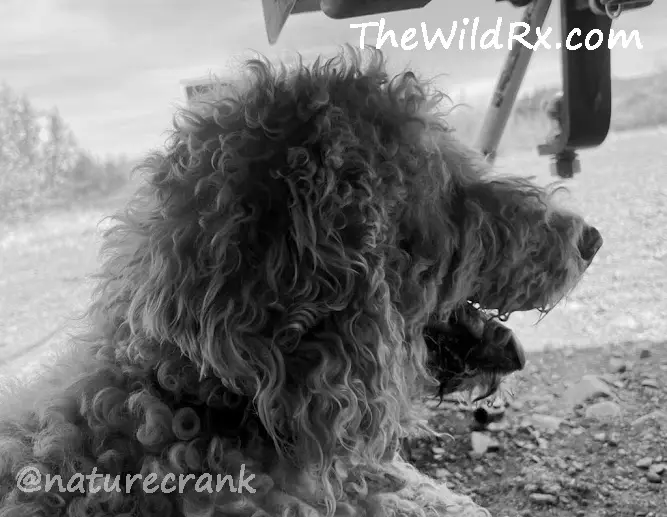
The trauma of those breakdowns paralyzed me for a year and a half. I was scared to travel anywhere. Then came 2025. My assistant, Maximus, passed away in February. By May, I decided to head toward Idaho. I knew the risk of losing my home, but I also knew I was blessed to at least have a roof over my head—unlike many who are fully exposed to the wind, monsoon rains, and hail.
Life wasn’t comfortable. Money was tight, I was constantly covered in desert grit, and I had to ration water. But occasionally, I found water holes where the dogs could stay clean and cool (Read more about water challenges here.).
The May 2025 breakdown
On May 4, 2025, we set off for Idaho. We made it somewhere close to 90 miles, and one of my rear tires detreaded. The back mud flaps are similar to semitruck flaps and have strips of metal holding them in place. The flap was gone, and the metal had gone into the inner dually tire.
God provided a safe place off Interstate 40 so that we were not so close to the busy road.
I have an impact gun to change the RV tires, but we couldn’t bust the bolts. Long story short, my friend’s insurance actually covered having an emergency roadside service come out. It took about six hours to finally get someone to come out, as this was on a Sunday. The kind man had actually busted his head wide open trying to change it. We got the tire changed a little after 9 pm and made it to the Walmart parking lot for the night so that I could change the bad tire out (I still needed a spare since I was using mine).
Diagnosing “The Beast” in Utah
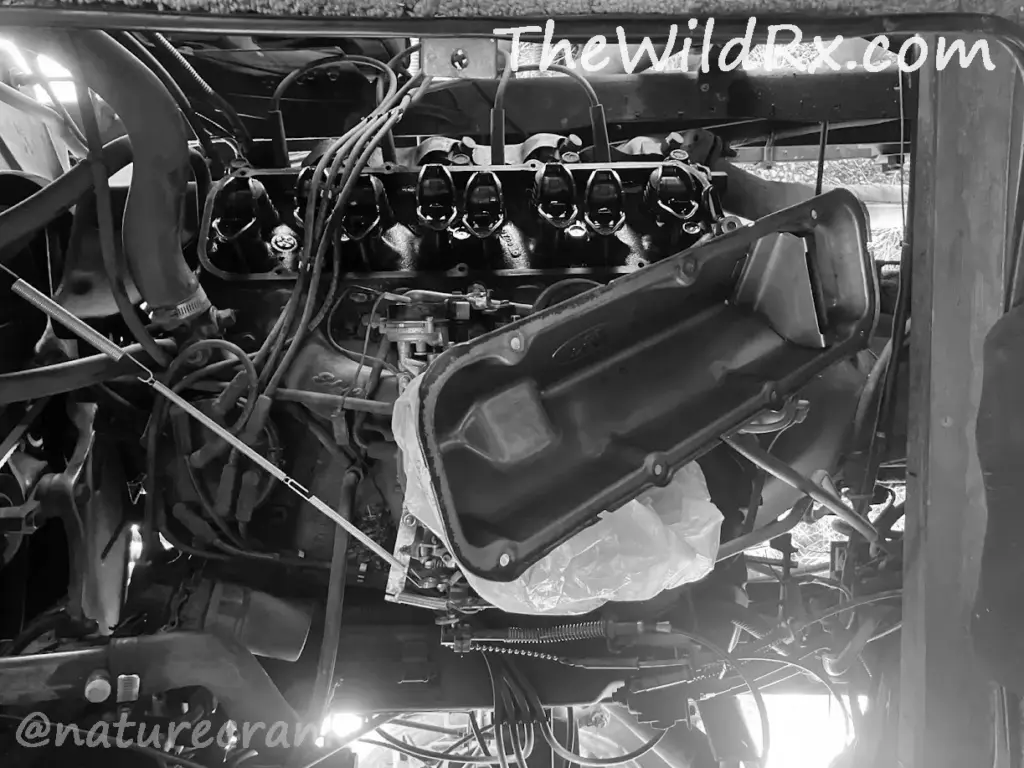
Eventually, we were back on the road. On May 6, the RV took a turn for the worse. We had been making it up and down the hills along the way from Arizona through Utah with no problem. Then, near Panquitch, UT, my RV said no more. It couldn’t do another hill as it lost power. So, on the next day, we drove back toward Panquitch to get a new air filter and fuel filter. After replacing the air filter, we headed up the highway for The Beast to break down yet again before I could change the fuel filter. I replaced the fuel filter, got it cranked, and we made our approach. Failure. It wouldn’t make the hill.
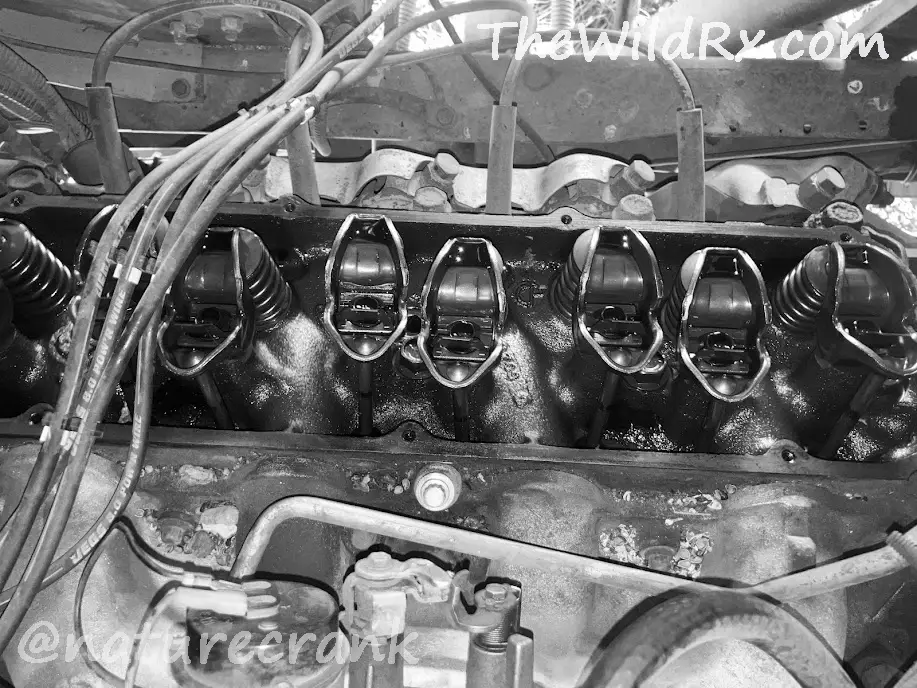
I feared the worst — the engine. However, my friend had to go forward for his medicine and such, but we were able to get to a safe place to camp once again. I couldn’t do anything, though. I didn’t have a pressure gauge at the time to check the engine or transmission. However, there was zero evidence of failure: no rough shifting, no smoke, no knocks, no grinding, the fluids were fine, etc. The carburetor was fine and it was not the charcoal pack or the catalytic converter. I could see an air leak coming from the valve cover and discovered an oil leak near one of the bolts.
But I couldn’t do anything about it. If I started taking things apart, I risked not being able to move the RV at all. Up to this point, it couldn’t do any hills and wouldn’t go faster than 35 mph.
Always have extra food and water — always!
An unexpected rescue
On May 29, a 73-year-old nonbeliever came to my rescue from Arizona with a gasket, lubricant, and a compression tester kit for the engine and transmission. She’s a great and feisty lady who would do anything for anyone. She had actually offered to come earlier, but I knew she had to come through in June. So, I felt there was little sense in wasting her time and fuel money. I could suffer through a few weeks, as I had enough food and water to hold Lady Midnight and I over for months. Always have extra food and water — always!
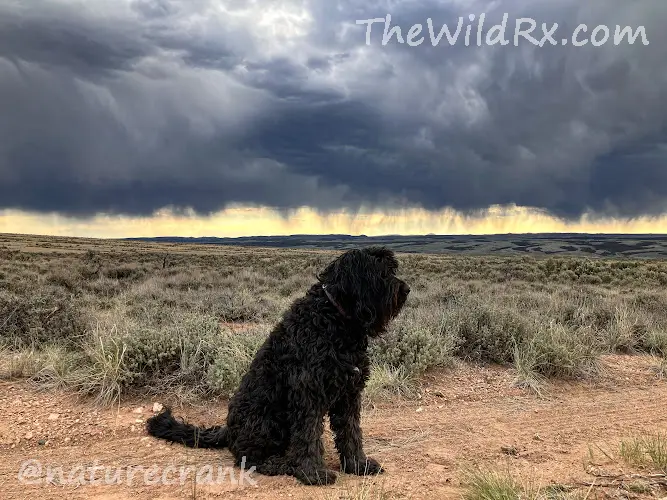
Pro tip: If you are living this lifestyle alone, I highly recommend having a dog. It fosters a sense of responsibility and purpose when things feel hopeless.
But lets rewind a few days. As I was looking over the engine and fuel system, something said, “Press on the gas pedal.” It was then that I discovered that the throttle linkage wasn’t fully being engaged. It could not get enough gas and air to make any climbs.
The next day, after the kind soul had arrived to my rescue, I changed the gasket and lubricated the linkage after it had been cleaned. The gasket was put on incorrectly and was leaking at 8 different points.
We hit the road, but of course not without issues. We skipped going over to Interstate 15 via highway 20 and crossed over at Interstate 70, which proved to be a much smarter route for vehicles that are either old and carbureted or operate questionably. I made it to Idaho to start a new chapter in this thing we call life.
Choosing light over “thoughts and prayers”
Lessons were learned (or relearned) both mechanically and spiritually. At the end of the day, people need to see a little light from us, Christian or not. The world is growing colder and darker each day.
Choose light. Be light. Share light. The right people at the right time will show up, whether the Church moves or not.
You don’t have to have a lot of money, but it takes more than “thoughts and prayers”. As times get hard, we have to do more to take care of each other. A mild inconvenience is nothing compared to an eternity of peril.
Frequently asked questions about RV breakdowns
Discover more from The Wild Rx aka NatureCrank™
Subscribe to get the latest posts sent to your email.