

Backpacking with dogs: The ultimate guide to trail safety and gear

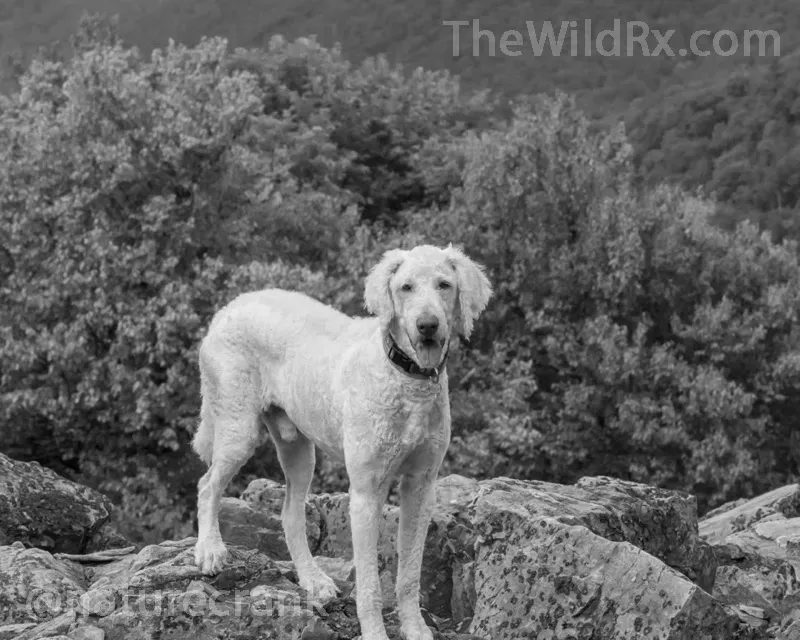
Please note this article was first written on NatureCrank.com when Maximus was still alive. Lady Midnight is my surviving dog. Some of the content has been updated.
Backpacking with your dog can transform an ordinary outdoor adventure into an unforgettable bonding experience. Whether it’s a short weekend hike or an extended journey lasting weeks, hitting the trails with your furry companion requires careful planning and preparation.
My late companion, Maximus, lived for these adventures. However, our first multi-week trek didn’t happen overnight. Living near the mountains, we built up to it with daily hikes and runs. Even then, those initial two weeks on the trail tested us in ways I hadn’t anticipated. His boundless energy outpaced mine, but I quickly learned that success depends on understanding your dog’s needs, the terrain, and the rules of the wild. Currently, I am conditioning my surviving dog, Lady Midnight, as we prepare for our next big trek.
Preparing your dog for long-distance hiking
A day hike is a world away from backpacking with your dog for weeks at a time. Maximus was a Labradoodle—half Poodle and half Lab—and while he was naturally athletic, we spent months conditioning near the mountains.
Even if your dog loves the woods, you must factor in their current fitness level. For example, while Lady Midnight hits the trails daily, neither of us is currently prepared for the rigors of the Appalachian Trail.
Essential pre-trip conditioning
- Start small: Gradually build stamina with shorter hikes over several months.
- Increase elevation: Start with flat terrain and slowly introduce steep climbs. If you are planning a longer journey, check out my Hiking and camping with dogs: The ultimate guide to safety, gear, and etiquette for more conditioning advice.
- Monitor behavior: If your dog lies down and stops, pay attention. They could be experiencing pain, arthritis, or an injury. Our canine friends can’t tell us what ails them, so we must be their advocates.
Dog hiking rules and trail etiquette
Before you leash up, you must research the specific rules and regulations of your destination.
| Category | Standard requirement |
| Leash laws | Usually 6 feet or shorter; some areas allow off-leash under voice control. |
| Vaccinations | Proof of rabies and up-to-date shots are often required. |
| Waste disposal | Pack it out or bury it 6–8 inches deep (200 feet from water). |
| Leave No Trace | Minimize impact on local wildlife and vegetation. |
Hands-free hiking and safety
Long-distance hikes are much easier with trekking poles, but they occupy your hands. I solve this by wrapping a belt around my waist and clipping the leash with a carabiner or d-ring.
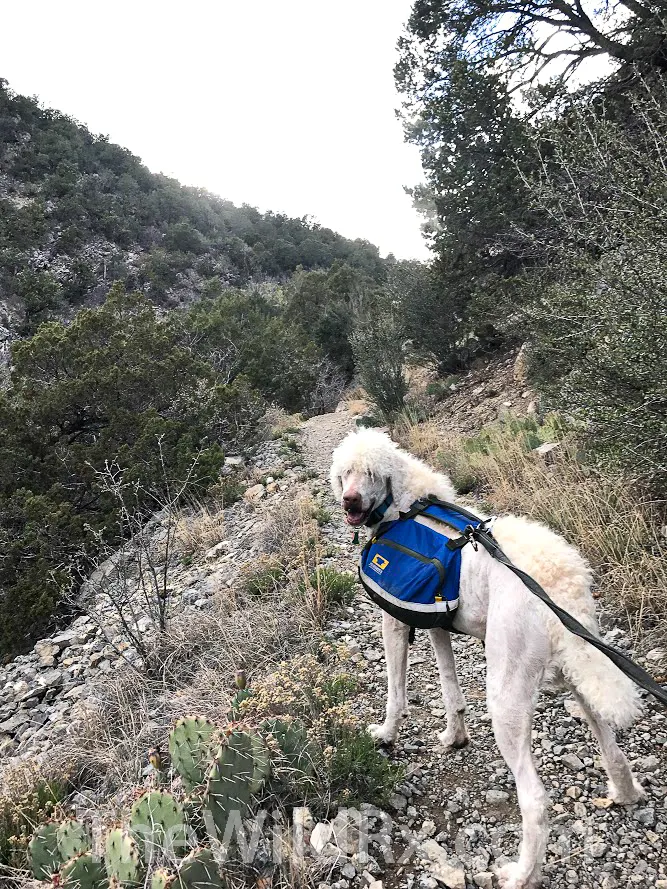
Pro tip: For safety, never attach the leash to your waist when navigating ice or large rocks. A sudden slip from either of you could result in a dangerous fall. I always use a dog harness or dog backpack rather than a collar to prevent neck injuries during a fall.
Managing dog food and water on the trail
Your dog’s nutritional needs skyrocket during a backpacking trip.
Caloric intake and supplements
A dog can burn 50% more calories per day while backpacking.
- Quality matters: High-calorie, grain-free foods are often more weight-efficient than cheaper brands.
- Weight management: Trails take weight off both you and your dog. Consider increasing their caloric intake a few weeks prior to the trip to help them gain a few “buffer” pounds.
- Feeding schedule: I feed breakfast and supper, with high-calorie supplements or treats at lunch or as needed.
Caloric planning: Because a dog can burn so many more calories per day while backpacking, precise measurement is crucial. You can learn exactly how to determine your pup’s daily requirements in my guide on dog hiking nutrition and how to calculate food for backpacking trips.
Hydration and parasite prevention
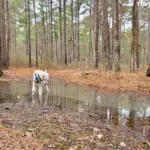
Dogs often prefer muddy puddles, but you must prevent them from drinking unfiltered water. Just like humans, dogs are susceptible to parasites like Giardia.
- Filter everything: Use a water filter and carry backup water tablets.
- Offer water often: Don’t wait for your dog to pant; offer water at every rest stop.
Water safety is a critical skill for both you and your pet. See my guide, The backpacker’s guide to water safety: From filters to water selection to ensure you have the right gear to keep your water source parasite-free.
Choosing the best dog backpacking gear
Allowing your dog to carry their own gear is a game-changer. Most healthy dogs can safely carry up to 25% of their body weight.
- Dog packs: Maximus eventually loved his pack because it signaled the start of an adventure. Store food in waterproof gallon zip bags to keep it dry.
- Weight distribution: Balance the load. I typically place a 16-ounce water bottle on each side to keep the pack centered.
- Sleep systems: If you expect cold weather, bring a lightweight sleeping bag or a Rothco Gen III waffle top for camp for your canine companion. Be careful to prevent overheating if your dog wears clothing while actively hiking. For more advice on staying warm in the backcountry, read my tips from the guide, How to add warmth to a camping sleep system: Pro-tips for cold nights.
Frequently asked questions about backpacking with dogs (FAQ)
Conclusion
Backpacking with your dog is more than just a hike—it’s a shared journey that deepens your connection. From navigating regulations to ensuring physical readiness, every step of preparation pays off when you see that tail wagging on a remote ridge. Whether I’m remembering the thousands of miles I shared with Maximus or looking forward to new horizons with Lady Midnight, the rewards of the trail are always worth the effort.
Free download: Don’t hit the trail unprepared!
Ready to take your pup on their first big trek? I’ve turned my years of experience on the Appalachian Trail and many others such as the Arizona Trail, Pacific Crest Trail, etc. with Maximus and Lady Midnight into a comprehensive dog backpacking safety checklist.
This two-page PDF covers:
- Essential gear you shouldn’t leave home without.
- Nutrition math to keep your dog energized.
- The nightly “body scan” to prevent trail injuries.
Click here to download the dog safety checklist and ensure your best friend stays safe, happy, and healthy on every mile.
If you want to continue your education on safe, low-impact travel with your best friend, review my tips on Proper camping etiquette: How to not be ‘that person’ in the woods.
Discover more from The Wild Rx aka NatureCrank™
Subscribe to get the latest posts sent to your email.