


The 90-day wall: Why you want to quit RV Life (and how to fix it)


The full-time RV lifestyle promises a life of “sunsets and shore power,” but there is a hidden milestone that social media rarely mentions (not to mention the over-processed images). Around the three-month mark—often called the 90-day wall—the initial thrill of the open road often collapses into a sense of overwhelming exhaustion. Many people ask, ‘Should I quit being a nomad or the RV life after 3 months?‘ But the answer is usually just a change in pace.
Whether you are a digital nomad in a van or a family in a Class A, this psychological barrier is where the “vacation phase” ends and the “real life” phase begins. If you’ve found yourself crying over a dumped black tank or feeling like a failure as a digital nomad, you aren’t failing—you’re just hitting the wall.
TL;DR: surviving the 90-day nomad wall
- What it is: A psychological slump around month three, where the “honeymoon phase” ends and travel fatigue sets in.
- The feeling: It’s common to find yourself feeling like a failure as a digital nomad or asking, “Why am I unhappy living in an RV?”
- The cause: Accumulated decision fatigue, logistical “life taxes”, and the stress of the Schengen 90/180-day rule for international travelers.
- The fix: Pivot from “vacation mode” to “living mode.” Implement the 2-2-2 rule, stay stationary for 30 days, and professionalize your workspace.
- The goal: Don’t quit; just slow down. Moving past the wall is what turns a “tourist” into a sustainable “traveler.”
What is the 90-day wall in van life and full-time RV living?
The 90-day wall is the emotional and mental hurdle that occurs when the novelty of nomadic life wears off and the cumulative stress of travel logistics sets in. By day 90, the “honeymoon phase” ends, often leaving people asking: “Should I quit being a nomad after 3 months?” This phenomenon is a mix of decision fatigue and the realization that your problems didn’t disappear—they just moved into 200 square feet. It’s the moment many travelers start searching for: “Why am I unhappy living in an RV?”
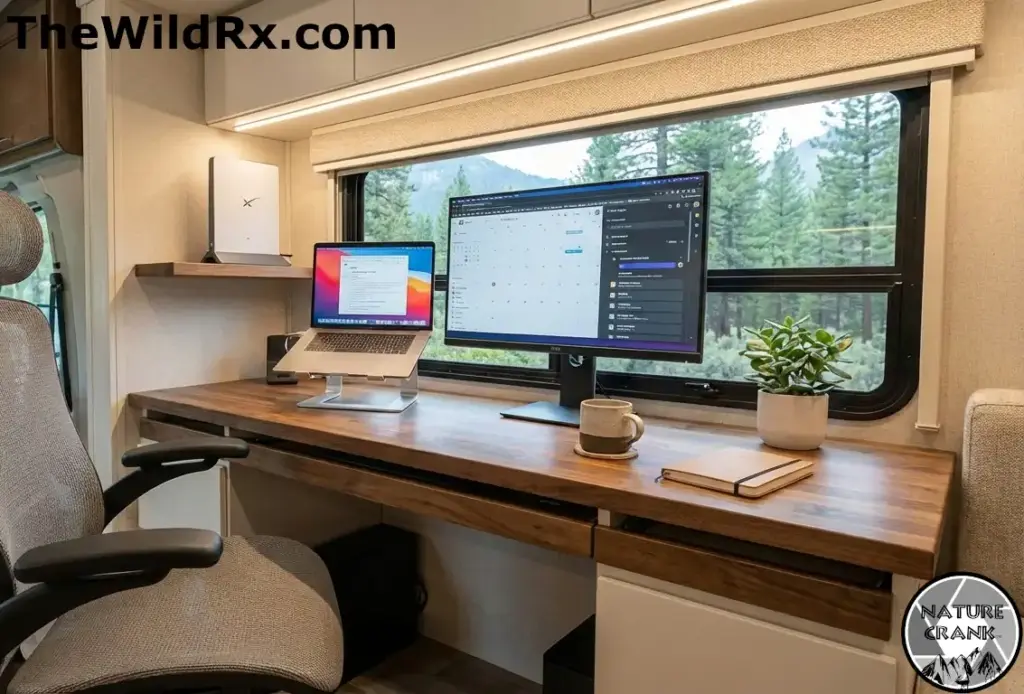
Why the transition from “vacation” to “lifestyle” is hard
Most people start their journey at a vacation pace, moving every three days. At 90 days, the body and mind demand a sustainable rhythm. If you don’t transition from “traveling” to “living,” nomad burnout is inevitable.
Why full-time RVers hit the wall at month three
Understanding the root causes of road fatigue can help you realize that your feelings of failure are actually physiological responses to a major life change.
- Decision fatigue: Every day requires 50+ small decisions: Is the ground level? How is the cell signal? After 90 days, the brain reaches a breaking point. Boondocking can definitely take a toll by adding the stresses of managing power, water, and waste.
- The “small space” pressure cooker: Living in an RV means your “safe space” is also your office and engine. When things break, there is no “away” to go to.
- Social displacement: The lack of a consistent RV community leads to profound isolation.
- Logistical friction: Tasks like laundry or mail now take half a day. This “life tax” adds up by the third month.
Worried about power surges at RV parks and campgrounds? Try the Hughes Autoformers PWD30-EPO (Power Watchdog).
Vacation vs. full-time RV reality
| Feature | The honeymoon phase (Month 1-2) | The 90-day wall reality (Month 3+) |
| Movement | Moving every 2-3 days | Dreading the next “hitch-up” day |
| Sights | Every hike is a “must-do” | Staying inside feels like a “waste” |
| Work | The dinette is “novel” | The dinette is killing your back |
| Community | Brief chats are enough | Deeply missing long-term friends |
To fix the ergonomic issues caused by the dinette, many digital nomads use a Roost Laptop Stand to bring their screen to eye level. Quality stands like the Roost or highly-rated alternatives run about $35-$90.
Warning signs you are approaching the 90-day wall
Recognizing full-time RV burnout signs early is the best way to prevent a total lifestyle collapse. Watch for these red flags:
- Irrational anger over small repairs: A leaky faucet causes a total meltdown.
- Location apathy: You are in a bucket-list destination but have no desire to leave the rig.
- Chronic “hitch-day” anxiety: You stay put only because you are too tired to move.
- Comparison syndrome: Feeling like a “fake” because your rig is messy and you’re exhausted.
Don’t forget to prioritize yourself!
The 90-day wall and the Schengen reality
The three-month wall isn’t original to full-time RVing. For international digital nomads, the “90-day wall” isn’t just a mental hurdle—it is a literal legal deadline. Under the Schengen 90/180-day rule, non-EU/EEA citizens (including Americans and, since Brexit, UK nationals) can only stay within the 29-country Schengen Area for a maximum of 90 days within any rolling 180-day period.
Note: Bulgaria and Romania have been added to the count, bringing the number to 29.
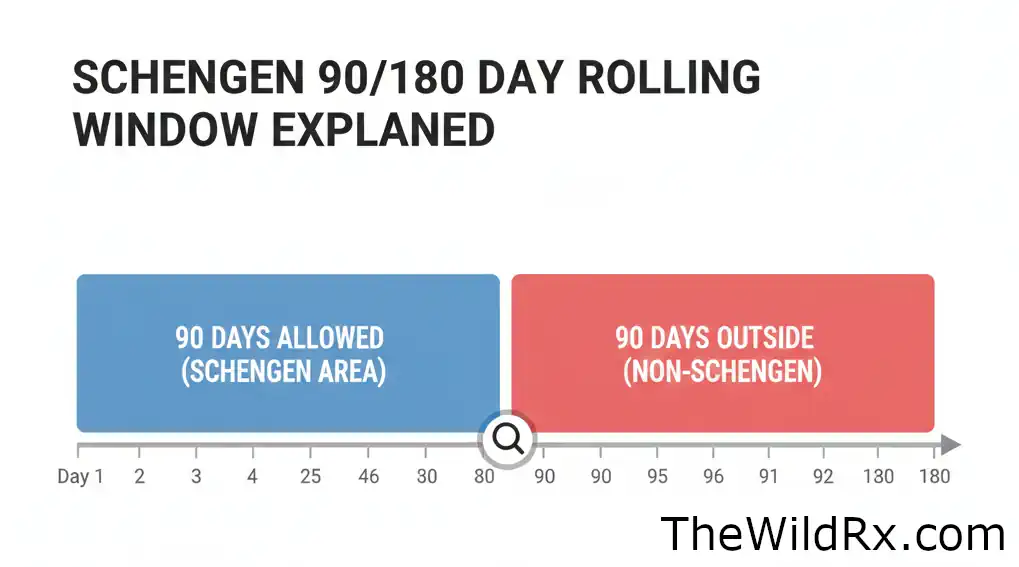
The mental load of ‘counting backward’ from a rolling 180-day window is a recipe for burnout. It turns travel from a joy into a legal logistics puzzle.
- The clock is rolling: Your 180-day window is not fixed; it constantly moves forward, requiring you to count backward from the current day to ensure you haven’t exceeded 90 days of stay.
- The entire zone counts as one: Moving from Germany to France or Italy does not reset your counter; the entire Schengen Area is treated as a single travel zone.
- Serious penalties: Overstaying this 90-day limit can lead to severe consequences, including significant fines, immediate deportation, or even re-entry bans ranging from one to five years.
To avoid hitting this legal wall, many nomads rotate their time by spending at least 90 days in nearby non-Schengen countries like Türkiye, Montenegro, or Serbia before returning to the zone.
Nomad Tool: Don’t do the math in your head. Use the Official EU Short-Stay Calculator to plan your next move.
Finding your “why”: The spiritual side of nomadic survival
While the 90-day wall is often built from logistical stress, it is sustained by a spiritual vacuum. When you remove the traditional pillars of life—your home, your local church or community center, and your physical “roots”—you must replace them with internal anchors.
If you don’t have a spiritual practice to ground you, the road starts to feel like aimless wandering rather than an intentional journey. This is often the root of why people ask, “Why am I unhappy living in an RV?” even when the scenery is beautiful.
Cultivating an “internal home”
To push through the wall, you need a practice that reminds you who you are, regardless of where you are. For some, this is a daily meditation at sunrise; for others, it is a dedicated prayer time or a deep-dive into a sacred text.
- Gratitude as a discipline: When the black tank leaks or the Wi-Fi fails, it is easy to spiral. A daily gratitude practice—writing down three things that went right—forces your brain to look for the “sunsets” instead of the “shore power” issues.
- The Sabbath on the road: Nomads often feel they must be “on” 24/7 because they are in a new place. Incorporating a “Sabbath”—a day of rest where you unplug from the GPS, the planning, and the work—restores the spirit.
- Connecting with the Creator: There is a unique spiritual clarity that comes from being in nature. Use your time in the wilderness to reconnect with something larger than yourself.
I found that prioritizing both my mental health and spiritual health maximizes my overall well-being. Without a sense of purpose, the most beautiful view in the world eventually feels like just another parking lot.
Related: The thru-hiker’s mental health guide: Preparation, trail blues & post-trail depression
Strategies for overcoming nomad burnout and pushing through
You don’t have to quit and go back to a mortgage. You just need to pivot your strategy to sustainable travel.
1. Embrace the “2-2-2 rule”
Seasoned travelers often refer to the 2-2-2 rule as a vital planning guideline to reduce travel fatigue and enhance safety. While there are variations like the 3-3-3 rule, the standard 2-2-2 strategy focuses on keeping your journey relaxed and manageable:
- Drive no more than 200 miles in a single day.
- Arrive at your destination by 2:00 PM, allowing ample time for setup and relaxation before dark.
- Stay for at least 2 nights at each location to properly explore and rest before getting back on the road.
Pro-tip on weekends: After having lived this life for nearly six years, I have found that my weekend is better placed in the middle of the week. This helps avoid crowds.
Some modern nomads even adapt this to include taking a break every 2 hours to stretch and recharge, or stopping at least 2 miles off the highway to find quieter, more scenic spots away from traffic noise.
2. Schedule a “stationary” month: the power of slowmadism
Find an RV resort and stay for 30 days. This allows you to find a “favorite” grocery store and stop the constant navigation. Slow travel is the single best cure for the 90-day wall.
3. Invest in your “office” setup
If you are working from the road, stop “making do.” Invest in an ergonomic chair and a reliable signal booster like Starlink. If your work life is chaotic, your nomadic life will feel like a failure.
4. Find your “people”
Join groups like Escapees, (akak Xscapers), or Fulltime Families. Attending a convergence reminds you that you are part of a larger community.
Read more about loneliness in the article, “Dealing with loneliness or isolation on the road“.
The 90-day wall recovery checklist: From burnout to balance
If the road feels heavy right now, use this checklist to diagnose your fatigue and start your recovery today.
Spiritual and mental reset
- [ ] Identify your “Internal Home”: Dedicate 10 minutes each morning to meditation, prayer, or journaling. Find a way to feel “at home” inside yourself, regardless of your GPS coordinates.
- [ ] Practice radical gratitude: Write down three things you are thankful for that have nothing to do with travel (e.g., your health, a good cup of coffee, or a supportive partner).
- [ ] Observe a digital Sabbath: Choose one 24-hour period each week to turn off your phone and GPS. Stop “planning” and start “being.”
- [ ] Connect with Nature: Spend 30 minutes sitting outside without a camera or a phone. Reconnect with the Creator or the natural world around you.
Reset your pace
- [ ] Implement the 2-2-2 Rule: Commit to slower travel for the next month.
- [ ] Book a “Stationary Month”: Stay in one park for 30 days to build a routine.
- [ ] Schedule a “Do Nothing” Weekend: Zero sightseeing. Just rest and recharge.
Upgrade your environment
- [ ] Audit your work setup: Invest in a laptop stand or a better chair.
- [ ] Create a “Go-To” meal plan: Reduce daily decisions with easy, 15-minute meals.
- [ ] Declutter one zone: Organize one cabinet to regain a sense of control.
Reconnect with community
- [ ] Find a nomad meetup: Use apps like Meetup or iOverlander.
- [ ] Schedule a video call: Reach out to a friend from your “sticks-and-bricks” life.
Frequently asked questions about the nomad wall
Conclusion: Turn the wall into a launchpad
The 90-day wall isn’t a sign that you should quit; it’s a sign that you need to evolve. The version of you that started this journey was a “vacationer.” The version of you that survives the 90-day wall is a “traveler.”
By slowing down and connecting with the RV community, you can move past the fatigue and into the most rewarding phase of nomadic life: true freedom.
I found that prioritizing both my mental health and spiritual health maximizes my overall well-being.
Did you hit the wall? If you’re currently staring at your GPS and feeling more exhausted than excited, you aren’t alone. We’ve all had that “what have I done?” moment in a Walmart parking lot or after a long day of “life taxes.”
Let’s normalize the struggle: At what point in your journey did the ‘Honeymoon Phase’ end for you? Was it day 90, or did it hit sooner? Drop a comment below, and let’s support each other through the slump.
Discover more from The Wild Rx aka NatureCrank™
Subscribe to get the latest posts sent to your email.